Not an AI generated photo. My paper chain skills remain solid.
The journey of a thousand miles begins with a single step.“
– Lao Tzu
When I was in the fourth grade, I was obsessed with the Guinness Book of World Records. For kids growing up before the internet, the Guinness book wasn’t really a reference book. It was a book of possibilities. Every page contained proof that ordinary people could become extraordinary simply by deciding to do something that no one else had ever done. There were the predictable records for the fastest, strongest, and tallest. There were also records for the longest fingernails, the heaviest twins, largest collection of belly-button lint, or number of spoons you could balance on your face. But there were also records that seemed wonderfully democratic. Anyone, at least in theory, could become a world record holder. You just had to pick the right record.
And it was that thought that led me to flip through those pages for hours until I found mine: the world’s longest paper chain.
To ten-year-old me, this was perfect. Unlike the world’s fastest runner or the tallest person, this one didn’t require unusual genetics or years of training. It required construction paper, glue, scissors, and determination. As far as I was concerned, those all seemed readily available.
Everything should be made as simple as possible, but not simpler.”
– Albert Einstein
I can’t recall now exactly how long the existing record was, but I do remember thinking it could absolutely be broken. You see, ten-year-old me was also pretty good at math. So instead of wondering whether we could break the record, I treated it like a word problem.
I timed myself making ten paper-chain links and connecting them together. Then I measured how long those ten links were. Once I had those data points, the rest was simple. If (a) one person could make X paper links every hour, (b) I recruited Y neighborhood kids, and (c) we all stayed awake for twenty-four straight hours, then (d) we would produce a paper chain longer than the existing world record.
The math worked perfectly.
Looking back, it seems obvious that point (c) was going to be the problem. Ten-year-old me, however, wasn’t worried about whether staying awake for twenty-four hours was realistic. I was worried about staffing. Without realizing it, I had created my first project plan.
Many hands make light work.”
– John Heywood
The recruiting campaign began. I went door to door convincing neighborhood kids that together we were about to become world record holders. Somehow, they bought in. Even more remarkably, so did my parents. They could have smiled politely and explained that maybe we should start with something smaller. Instead, they purchased what felt like an endless supply of construction paper and transformed our garage into mission control.
Soon there were kids everywhere, cutting strips, applying glue, looping one link through another, then another, then another. The pile of colored paper slowly transformed into something tangible. Every new link felt like progress toward history.
Then we encountered our first logistical problem. Where exactly do you put the world’s longest paper chain?
Fortunately, my dad had a solution. He installed measuring posts down the block so we could stretch the chain between them and calculate our progress. He never questioned the premise. He simply assumed that if we were attempting a world record, we’d need a reliable measurement system. (I’ve written about my dad a couple of times before, and this story deserves to be added to his growing list of extraordinary acts of parenting.)
Success is where preparation and opportunity meet.”
– Bobby Unser
One of my favorite subplots from Paper-Chain-Making Day concerned my realization that we’d eventually need to validate our achievement. I became so confident we were going to succeed that I called the local newspaper, the Arizona Republic. Mind you, I called them not after we’d broken the record. Not even when we were getting close. Before. Apparently, ten-year-old-me believed newspapers appreciated advance notice for impending world records.
The details are fuzzy now, but I remember looking up the newspaper’s phone number in the phone book and giving them a call. I’m not sure who answered, but I gave a very detailed explanation of our ambitious undertaking. To their credit, someone actually listened. Somewhere in the newsroom, someone apparently decided that a gang of fourth graders attempting to build the world’s longest paper chain was worth keeping an eye on. They say some stories write themselves. This wasn’t one of them.
Everybody has a plan until they get punched in the mouth.”
– Mike Tyson
In the end, the math had been flawless. Reality was less cooperative.
Around dinnertime, cracks began to appear in my workforce. One kid had to go home because dinner was ready. Another had family plans. Someone else got tired. Another simply lost interest. One by one, my labor force evaporated. The calculations that had looked so elegant on paper hadn’t included parents. Or boredom. Or pizza. Or the simple reality that asking fourth graders to stay awake for twenty-four consecutive hours is, in retrospect, a terrible management strategy.
I don’t remember how close we got. I don’t remember how long the existing record actually was. I don’t remember what eventually happened to the enormous paper chain we’d created.
I do, however, remember the phone ringing sometime after we had called it quits. The reporter was calling back. I had to tell him we hadn’t broken the record after all. To be honest, I don’t remember whether he sounded disappointed, whether I only imagined he did, or whether I was simply hearing my own disappointment reflected back at me. Either way, our world-record attempt quietly became just another neighborhood story.
(Incidentally, the current Guinness World Record for the longest paper chain created by a team in twenty-four hours is 54.33 miles, set by Paul D. Camp Community College in Virginia in 2005. I remain convinced we were only a few hundred neighborhood kids short.)
The trail is the thing, not the end of the trail.”
– Louis L’Amour
My paper chain may not have gotten very far, but it turns out distance wasn’t really the point. I found the same lesson inside A. B. Guthrie Jr.’s The Way West, winner of the Pulitzer Prize for Fiction in 1950, and is often considered the definitive literary novel of the Oregon Trail, capturing westward expansion not as myth, but as a difficult, messy, deeply human undertaking. Set in the 1840s, it follows a wagon train leaving Independence, Missouri, bound for the Oregon Territory. At the center of the story is Dick Summers, an experienced mountain man hired to guide dozens of families across nearly two thousand miles of wilderness. They leave with maps, supplies, livestock, carefully planned routes, and enough optimism to believe they can cross an entire continent.
At first, the journey seems almost mathematical. They know how many miles they hope to cover each day. They know where the rivers are. They know where they’ll camp. On paper, everything works. Then the West has its say.
Rivers become impassable. Storms destroy carefully laid plans. Tempers flare. Leaders are questioned. Friendships fracture. People become exhausted. Guthrie’s novel slowly reveals that the greatest obstacle to reaching Oregon isn’t the mountains or the rivers. It’s the travelers themselves. Every ambitious undertaking eventually stops being a logistical problem and starts becoming a human one. The maps don’t become wrong. They simply become incomplete because they can’t account for fear, stubbornness, fatigue, ego, or hope.
The Way West has aged remarkably well. Guthrie doesn’t romanticize the frontier the way many Westerns do. Instead, he treats westward expansion as a profoundly human enterprise, filled with courage, selfishness, resilience, pettiness, generosity, and doubt. The novel is rich in atmosphere and remarkably thoughtful about leadership and group dynamics, which is why it has remained a classic of the genre for more than seventy-five years. If it has a weakness, it’s that modern readers may find its deliberate pace a bit demanding. Like the wagon train itself, the novel doesn’t hurry. There are stretches where the journey feels repetitive, and Guthrie occasionally spends more time describing landscapes than developing individual characters. But that slow rhythm is also part of its power. By the time you reach Oregon, you feel as though you’ve crossed the continent alongside the travelers, one exhausting mile at a time.
By the time I reached the last page, I couldn’t help but think about my paper chain. My calculations weren’t wrong. If twenty neighborhood kids each produced a certain number of links every hour, we probably would have broken the record. What my spreadsheet failed to account for was exactly what Guthrie understood. Human beings get hungry. They get tired. They lose patience. They decide they’d rather be somewhere else.
The Oregon Trail had rivers and mountain passes. My expedition had pizza. Different obstacles, perhaps, but exactly the same lesson.
Great things are done by a series of small things brought together.”
– Vincent van Gogh
Guthrie understood something that applies just as well to wagon trains as paper chains. Every extraordinary accomplishment is really just an accumulation of ordinary actions repeated far more times than anyone thinks possible.
Writing a book is mostly writing one page after another. Running a marathon is mostly taking one more step. Learning a language is mostly showing up for one more lesson. Building the world’s longest paper chain is mostly making one more link. The pioneers in The Way West didn’t reach Oregon through one heroic act. They reached it one campsite, one river crossing, one difficult decision, and one exhausting day at a time.
It’s remarkable how often this lesson reappears. We eat an elephant one bite at a time. We climb mountains one step at a time. Cathedrals are built one stone at a time. James Clear encourages us to become one percent better every day. Jerry Seinfeld famously kept a calendar where the goal wasn’t to write something brilliant each day, only to “not break the chain.” Even writing Pulitzer Schmulitzer has turned out to be little more than reading one chapter, then another, then another. Different metaphors. Same truth.
The secret isn’t usually brilliance. It’s endurance.
The credit belongs to the man who is actually in the arena.”
– Teddy Roosevelt
For years, I thought this story was about failing to break a world record. Now I think it was really about getting the chance to try.
My parents never laughed. They bought the construction paper. They surrendered the garage. My dad installed measuring posts down the street because if his ten-year-old son was going to chase a world record, he’d need a proper way to measure it. For one glorious Saturday, they treated an impossible dream as though it were completely reasonable. Looking back, that may have been the greatest gift of all.
The pioneers in The Way West eventually discover that crossing the American frontier isn’t a triumph of maps. It’s a triumph of perseverance. The map can tell you where you’re going, but it can’t tell you whether you’ll keep walking when things get difficult. The same was true of my paper chain. Breaking the record was never going to depend on paper, glue, or multiplication. It was always going to depend on people.
The funny thing is, after all these years, I still think the math worked. We were simply solving for the wrong variable.
We never built the world’s longest paper chain. But for one unforgettable day, an entire neighborhood believed we just might. Looking back, I don’t remember how long the paper chain became. I only remember how long we believed it could become.
Yesterday, Spain won the World Cup. The trophy was lifted. Confetti filled the air. As the tournament ended, the last wave of supporters headed home while millions of others were already back in dozens of countries, carrying whatever souvenirs they’d collected during a month in North America. Somewhere among them was a Norwegian soccer star with a taxidermied raccoon.
There really isn’t another sporting event like the World Cup. Every four years, for one extraordinary month, national identity becomes the world’s most popular spectator sport. People who spend the rest of their lives arguing about politics, religion, or almost anything else suddenly find themselves united behind the same eleven players wearing the same colors. The tournament doesn’t belong to clubs or leagues. It belongs to countries.
The Olympics come closest, but they’re fundamentally different. The Olympics celebrate breadth, asking us to marvel at hundreds of events across dozens of sports. The World Cup is almost monastic in its focus. Twenty-two players. One ball. One trophy. For a month, a substantial portion of humanity cares about exactly the same thing. (As an aside, this BBC montage of the tournament is fantastic.)
But as much as I love the soccer, that wasn’t what made this tournament unforgettable. It was the travelers.
I was lucky enough to attend several matches myself during this World Cup. The first was Switzerland versus Qatar. If I’m being honest, I didn’t particularly care who won. It didn’t matter. Forty thousand people around me cared enough for all of us.
For two hours, I borrowed their passion. Fans sang songs I’d never heard. Flags I’d rarely seen outside geography textbooks waved in every direction. Every completed pass, every missed opportunity, every referee’s whistle felt monumental because the people around me treated it that way. Their enthusiasm became my enthusiasm.
A week later, Parisa and I landed in Mexico City on the night (coincidentally) Mexico was playing at the Azteca. I’ve been fortunate to visit a lot of cities. I’ve never seen one quite like that.
Every restaurant had its televisions pointed toward the match. Every plaza filled with people hours before kickoff. Cars rolled through intersections with enormous Mexican flags streaming from their windows while complete strangers shouted “¡México!” across traffic and received equally enthusiastic replies. The city wasn’t simply watching soccer. It was participating in it.
A few days later, we joined a taco tour and met a man from South Africa who may become the person I remember most from this entire World Cup. He had flown from Johannesburg to Mexico City for South Africa’s opening match. Then he flew to New York, rented a car, drove to Atlanta for the second game, and eventually made his way to Monterrey for the final group-stage match. Thousands of miles, two countries, and countless hours on airplanes and highways, all to follow one national team.
Naturally, we asked him about his trip. What had been his favorite part of North America? The tacos? Times Square? The mountains? The people? He smiled. “Buc-ee’s.”
We laughed. Not because he was wrong – Buc–ees is undeniably amazing – but because his answer was wonderfully specific. He wasn’t talking about the rows of gas pumps or the oversized beaver mascot. He was talking about the employees shouting, “Fresh brisket on the board!” every time another brisket came out of the smoker. Somehow that joyful little chant had become the story he was most excited to carry home to Johannesburg.
The more I thought about it, the more perfect his answer seemed. Throughout the tournament I kept seeing visitors fall in love with things most of us stopped noticing years ago. A Brazilian couldn’t believe the size of American pickup trucks. A German was delighted by free refills. An English supporter became inexplicably obsessed with ranch dressing. Another visitor wondered why every drink contained enough ice to preserve a woolly mammoth.
None of them were discovering hidden treasures. They were discovering ordinary North America. That’s what travel does. It edits our stories.
Nobody comes home talking about baggage claim or the hotel room. We remember the ordinary things that felt extraordinary because they were unfamiliar: the bartender who insisted we try the local beer, the tiny bakery we found after a wrong turn, the Tokyo 7-Eleven selling fresh meals, or the Nordic hotel that solved blanket stealing with two separate duvets.
None of those moments would appear in a travel brochure, yet they are often the ones that stay with us. Travel sharpens our attention. It makes us notice the small customs, habits, and encounters that locals stopped seeing long ago. Sometimes it takes going halfway around the world to discover something new. Sometimes it takes a visitor to help us see what was already there.
That realization brought me back to Robert Lewis Taylor’s The Travels of Jaimie McPheeters, the Pulitzer Prize winner for Fiction in 1959. Like every great travel story, the novel begins with a destination. Twelve-year-old Jaimie McPheeters and his physician father, Sardius, leave Missouri in 1849, joining thousands of Americans heading west after news of gold in California. Like nearly everyone around them, they believe California promises reinvention. Wealth. Adventure. A chance to begin again.
The farther west they travel, however, the less important California becomes. Instead, Taylor fills the trail with an astonishing parade of humanity: gamblers, prospectors, swindlers, preachers, doctors, merchants, soldiers, entertainers, pioneers, widows, dreamers, and drifters. Some become companions for hundreds of pages. Others disappear almost as quickly as they arrive, continuing down the trail and out of the novel forever. At first, the structure feels almost chaotic. Taylor keeps introducing fascinating people just as you’re settling into the last group. Characters drift into Jaimie’s life, dominate a few chapters, and then quietly move on. If you’re a reader accustomed to tightly engineered plots, you may wonder whether the novel is ever going to settle down.
Eventually, though, you realize Taylor isn’t losing control of the novel. He’s recreating what travel actually feels like. When we remember a trip, the itinerary fades long before the people do.
That’s Jaimie’s gift. He’s curious in the way children often are before adulthood convinces us we should already know everything worth knowing. He asks questions. He listens. He notices details everyone else overlooks. His greatest talent isn’t surviving the frontier. It’s paying attention. By the time he finally reaches California, the Gold Rush itself almost feels incidental. The real treasure had been traveling beside him all along.
In some ways, this World Cup felt like a twenty-first-century version of Jaimie McPheeters’ journey. In 1849, Americans crossed a continent searching for opportunity. In 2026, the world crossed an ocean to visit us. The direction changed, but the lesson didn’t. The journey was never really about the destination. It was about the people encountered along the way.
Months before the tournament began, newspapers devoted endless coverage to whether North America was ready to host the World Cup. Would the airports work? Would transportation collapse? Would there be enough hotel rooms? Would security hold?
They were fair questions. By the end of the tournament, though, I found myself asking a different one: Were we good hosts? I think so. Not because every train ran on time or traffic wasn’t terrible. Visitors rarely remember logistics. They remember how a place made them feel. They’ll remember the strangers who made an unfamiliar country feel unexpectedly familiar.
One of my favorite parts of this World Cup was watching patriotism quietly give way to hospitality. Flags stopped feeling like political statements and became invitations to conversation. Adults who normally avoid eye contact found themselves talking in airport terminals, train stations, breweries, food halls, and stadium concourses. The questions were almost always the same: Where are you from? How long are you here? Where are you headed next? What shouldn’t I miss? For one month, strangers became neighbors. I suspect that’s the souvenir many visitors carried home.
Like many Pulitzer winners from the middle of the twentieth century, The Travels of Jaimie McPheeters won’t be for everyone. Readers looking for a tightly plotted adventure may find its pace frustrating. Taylor is perfectly willing to wander away from the central narrative because another interesting person happens to cross Jaimie’s path. Entire episodes exist simply to let us spend time with someone we’d never have invented ourselves.
Ironically, that’s exactly what makes the novel memorable. Taylor understands something every experienced traveler eventually learns: the detours aren’t interruptions. They’re the destination.
I’ve already forgotten who scored Switzerland’s goal against Qatar, and before long I’ll probably have to look up parts of the knockout bracket as well. That’s what happens with sports. Results blur together until only the champion remains. The people don’t.
I’ll remember the South African who somehow found his favorite memory of North America in a Buc-ee’s brisket chant. I’ll remember Erling Haaland deciding that the souvenir he couldn’t leave behind was a taxidermied raccoon from a western store in Dallas. On the surface, they couldn’t have been more different. And yet they were really the same story.
Like Jaimie McPheeters, they discovered that travel isn’t measured by the miles you cover or the landmarks you visit. It’s measured by the unexpected moments you never could have planned. Travel has never been about collecting places. It’s about collecting stories.
Millions of visitors returned home with jerseys, scarves, photographs, and souvenirs. I suspect the things they’ll treasure most, though, are the stories they never expected to collect.
As graduation season comes to a close, I’ll admit I have a soft spot for commencement speeches. There is something charming about the whole enterprise. Every spring, universities invite an accomplished person to stand in front of thousands of young people and attempt the impossible task of distilling a lifetime of wisdom into twenty minutes.
I’ll also admit that I probably won’t miss this year’s crop of speeches that were less inspiring than usual. Instead of memorable advice, many ceremonies generated news because students booed speakers who dared mention artificial intelligence. These might have made for good headlines, but I miss the speeches that aimed a little higher.
I miss Steve Jobs telling Stanford graduates that “you can’t connect the dots looking forward; you can only connect them looking backwards.” I miss Matthew McConaughey advising students that happiness is not the same thing as joy, and that chasing the former often gets in the way of finding the latter. And I miss Jerry Seinfeld, who’s speech at Duke I happened to see in person, giving more lighthearted guidance: “Do not lose your sense of humor. Not enough of life makes sense for you to survive without it.” Whether you agreed with them or not, those speeches were trying to answer the biggest questions: How should we live? What matters? What will we regret?
One of my favorites came from author George Saunders at Syracuse University in 2013. Saunders began with a familiar commencement premise: an older person reflecting on a life filled with mistakes. He talked about embarrassing moments, bad jobs, and various youthful misadventures. Then he surprised everyone. The thing he regretted most wasn’t a career decision, a financial mistake, or some missed opportunity.
It was a girl.
When Saunders was in seventh grade, a shy new student arrived at his school. She was awkward, frequently teased, and painfully lonely. Saunders wasn’t cruel to her. He never joined in the bullying. Occasionally, he even defended her. But he didn’t do enough. Years later, what haunted him wasn’t anything he had done. It was what he hadn’t done.
“What I regret most in my life,” he told the graduates, “are failures of kindness.”
Not acts of cruelty. Failures of kindness. The distinction is important. Most of us can think of moments when we weren’t our best selves. Saunders was talking about something more subtle. He was talking about those times when another person was suffering right in front of us and we responded, in his words, “sensibly. Reservedly. Mildly.” We saw the need and chose not to fully engage.
Then Saunders asked a question that has stuck with me ever since I first heard this speech: “What’s our problem? Why aren’t we kinder?”
It’s a question that feels especially relevant today. We live in a culture obsessed with achievement. We tell graduates to dream big, work hard, change the world, build companies, make money, find success. To be clear, I’m not against any of those things and Saunders wasn’t either. His point was simply that, when we look back on our lives, our deepest regrets may not be about ambition at all.
They may be about people.
Maybe we can / Find a place to feel good / And we can treat people with kindness “
– Harry Styles, “Treat People with Kindness”
Which brings me to The Edge of Sadness, Edwin O’Connor’s Pulitzer Prize-winning novel from 1962. At first glance, it seems like an odd companion to a graduation speech. Commencement addresses are usually delivered to people standing at the beginning of their adult lives, full of ambition and possibility. The Edge of Sadness is about people who have already lived most of theirs.
O’Connor’s novel follows Father Hugh Kennedy, a middle-aged Catholic priest returning to his old Boston parish after years away. Once considered a rising star in the Church, Kennedy has spent time recovering from alcoholism and carries more than his share of disappointments, doubts, and regrets. If graduation speeches ask, “What kind of life should I build?” The Edge of Sadness asks a different question: “What happens when the life you built doesn’t quite turn out the way you imagined?”
Back in Boston, Kennedy reconnects with the Carmody family, wealthy Irish Catholics he has known for years. On the surface, they seem successful and enviable. But beneath that polished exterior are broken relationships, loneliness, addiction, resentment, and grief. As Kennedy becomes entangled in their lives, he finds himself serving less as a traditional priest and more as a witness to the quiet suffering that people carry behind closed doors.
What struck me most about the book was how ordinary the sources of suffering are. Nobody sets out to hurt anyone. Instead, the damage comes from smaller failures. People withdraw when they should engage. They protect themselves when they should be vulnerable. They hold back words that should be spoken. They choose pride over understanding. Again and again, people fail to fully show up for one another.
Which brings us back to George Saunders. When Saunders talks about his regret over the lonely girl in seventh grade, he is careful to point out that he wasn’t mean to her. His regret is that he wasn’t kinder.
That same idea runs throughout The Edge of Sadness. The characters aren’t suffering because they were surrounded by evil people. They are suffering because they were surrounded by ordinary people. People who were busy, distracted, frightened, proud, wounded, ambitious, or uncertain. In other words, people very much like the rest of us. While Saunders asks his audience, “What’s our problem? Why aren’t we kinder?”, O’Connor spends an entire novel exploring the consequences of that question.
One of the most hopeful aspects of both the speech and the novel is that neither views kindness as some grand heroic act. Saunders isn’t urging graduates to solve world hunger. Father Kennedy isn’t performing miracles. Both are talking about something smaller and, therefore, more difficult: paying attention to the people directly in front of us. Noticing loneliness. Extending grace. Choosing compassion over judgment. Making the extra phone call. Asking the follow-up question. Staying in the conversation a little longer.
You’ve got to try a little kindness / Yes, show a little kindness / Just shine your light for everyone to see“
– Glen Campbell, “Try a Little Kindness”
As I was thinking about Saunders’s speech, I found myself returning to a story I told a few months ago in my post about The Reivers and a Super 8 movie called The Meat Eater that I had made when I was twelve years old with two friends, Jamie and Dave. The movie itself was ridiculous. Dave played a serial killer. Jamie played a detective. I played the victim. Repeatedly. There was ketchup, hamburger meat, and an alarming lack of adult supervision. But the story ended up being about something else.
I also mentioned that after my mother died between seventh and eighth grade, Jamie was unusually kind to me. Nothing dramatic. No grand gesture. He simply spent time with me during a period when I needed friends more than I probably understood. Decades later, I still remember it. When Jamie and I reconnected last year and I mentioned it to him, he seemed genuinely surprised. He barely remembered it happening.
A few months later, on a whim, I tracked down Dave. The last time I had seen him was when we were teenagers. After freshman year of high school, he and his mother moved to San Diego, and like so many friendships in the pre-internet era, ours simply disappeared. Today, if someone moves away, you still see photos of their vacations, their kids, and their lunch choices. Back then, when someone left, they were simply gone. You had no idea what happened to them. They just vanished into the static.
Somehow, through a remarkably lucky Google search, I discovered that Dave lived less than a mile from me. Last week, we met for dinner and spent the evening laughing about The Meat Eater, filling in gaps in each other’s memories, and marveling at the strange paths our lives had taken.
And, echoing the conversation I had with Jamie, during our dinner, Dave told me something I had completely forgotten. Toward the end of junior high, his parents divorced and this had been much harder on him than I ever knew. He told me that one of the things that helped him through that difficult period was our group of friends.
“We had so much fun,” he said.
He said that giving up that friend group was the hardest thing about the move to San Diego. Then he told me something even more surprising. After moving away, he continued having dreams about us well into his thirties. I was stunned.
For Dave, our little group of friends wasn’t just a collection of kids riding bikes, making bad horror films and wasting summer afternoons. It was a refuge during one of the most difficult periods of his young life. The memories stayed with him for decades.
I had no memory of any of that. Just as Jamie didn’t remember being kind to me, I didn’t remember being there for Dave. And that’s the part of George Saunders’s speech that feels truer to me every year.
Kindness don’t ask for much / But an open mind / Kindness can cure a broken heart / Honey, are you feelin’ kind?”
– Ryan Adams, “Kindness”
When Saunders talks about kindness, he’s not describing grand acts of heroism. He’s talking about the small opportunities that present themselves in ordinary life. The lonely kid sitting by herself. The friend whose mother has died. The classmate whose family is falling apart. The person standing quietly at the edge of the group. Most of the time we don’t know which moments matter.
In my conversation with Jamie, I learned that afternoons spent playing with my dad’s early home computer helped spark an interest that eventually led him into the tech industry. In my conversation with Dave, I learned that friendships I had largely forgotten became some of the most cherished memories of his childhood. And in both cases, the people involved remembered those moments far more clearly than I did. Which is perhaps the most beautiful thing about kindness. The effects can last far longer than our memory of giving it.
George Saunders told a group of graduates that his greatest regrets were failures of kindness. More than a decade later, I think the inverse may be true as well. Some of the most meaningful things we ever do may be acts of kindness so small that we don’t even remember them.
The world spends a lot of time telling graduates to think about their future. Their career. Their success. Their ambitions. That’s understandable. But George Saunders and Edwin O’Connor remind us that when we eventually look back on our lives, what we remember most vividly may not be our accomplishments at all.
It may be the people. The friend who showed up. The person who made us feel less alone. The afternoon that seemed ordinary at the time. The kindness that neither person realized would matter for the next forty years.
You may be creating one of their favorite memories without even realizing it.
Arsenal won the Premier League title this week for the first time in twenty-two years. Across North London, people poured into the streets celebrating. Fans climbed statues, lit flares, hugged strangers, sang songs, cried, and generally behaved with the calm restraint one expects after two decades of emotional repression and annual sporting disappointment. I’ve watched the video of the Arsenal team celebrating at least twenty times.
Meanwhile, I was in my office in San Francisco refreshing social media, texting friends, and feeling both euphoric and strangely homesick for a place that is not remotely my home. Admittedly, my love of Arsenal isn’t completely logical. I have no genetic connection to North London. I became an Arsenal fan in 2014 via a surprisingly methodical decision process. After the World Cup that summer, I realized how much I enjoyed watching soccer and wanted to watch it more often than every four years. But sports without emotional investment has never really worked for me. I’ve never understood how people casually watch games without caring who wins. The emotional attachment is the whole point. So I needed a team.
The MLS wasn’t (isn’t) good, so I turned to the international leagues, and since I speak English, the Premier League felt more accessible than La Liga or Bundesliga. At the time, I was working for OpenTable and traveling to London fairly often, so I decided I wanted a London club because I figured someday I might actually see them play in person. I also wanted a team unlikely to be relegated because I was new to the sport and emotionally unprepared for immediate catastrophe. Hence, no Queens Park Rangers.
That left Chelsea, Arsenal, Tottenham, and West Ham. Chelsea was ruled out immediately because rooting for them in 2014 felt like becoming a Yankees fan but with more Russian billionaires and scarves. Some English friends described West Ham as “a little dodgy.” So eventually it came down to Arsenal and Tottenham.
And the deciding factor, fittingly enough, was a book.Years earlier I had read Fever Pitch by Nick Hornby. Most people know the title because it became a movie starring Jimmy Fallon about the Red Sox winning the World Series in 2004, but the original book was about Arsenal. More specifically, it was about the exquisite psychological damage that comes from loving Arsenal. Hornby somehow made sports fandom feel literary and meaningful instead of just a highly organized form of public anxiety. The suffering itself became part of the romance. Looking back, this should probably have registered as a warning sign. Instead, I chose Arsenal. Which meant I arrived at almost exactly the wrong time.
They finished 3rd in the first season I followed them and 2nd a year later. But those were followed by 5th and then 6th, and their long-time manager, Arsene Wenger resigned. He was followed by Unai Emery who lasted only a year and a half. With Arsenal sitting in 8th place in November 2019, Emery was let go.
I believe the club has lost direction.”
– Mikel Arteta, December 2019
By the time Mikel Arteta took over as manager a month later, Arsenal was widely viewed as a mess. They had finished 5th, 6th and 5th the three years prior and had failed to qualify for Champions League. The atmosphere around the club had become toxic. Fans were furious. Ownership was distrusted. The roster was unbalanced. Arsenal had gone from one of Europe’s model clubs to a punchline. There were actual debates about whether they could even get back into the Champions League, much less compete for a title.
And yet Arteta kept talking about process, standards, culture, patience, and belief. At the beginning, almost nobody wanted to hear it. But slowly, painstakingly, Arsenal improved. Young players developed. The team became more disciplined. Tougher. More coherent. There was a plan now, even if it wasn’t producing trophies yet. After finishing 8th in each of Arteta’s first two seasons at the helm, they finished the 2021-22 campaign in 5th.
The problem was that once Arsenal finally became good again, they became almost unbearably close. The next three seasons felt increasingly cruel. Arsenal finished second three years in a row, twice to Manchester City and once to Liverpool. Twice they led the league deep into the season before collapsing under the pressure and getting labeled “bottlers,” which is English soccer slang for people who psychologically disintegrate in public.
This season felt destined to end the same way. Arsenal sat atop the table for most of the year before losing at home to Bournemouth in April, a defeat that felt painfully familiar. After the loss, Arteta said: “Today we have to suffer. It’s painful. It’s a terrible feeling. But tomorrow is a different day.” Unfortunately, it wasn’t. The following week they lost to Manchester City and fell to second place, and for a moment it seemed like the same script was playing out for the fourth consecutive season.
This time, however, it turned out tomorrow was a different day. After the defeat at Man City, Declan Rice was caught on camera rallying his teammates and saying “its not done.” Arsenal fans immediately immortalized those three words and created an entire TikTok chant in his honor. And instead of folding, Arsenal steadied themselves. Arsenal won out while City stumbled. And fittingly enough, City’s fatal blow eventually came against the same Bournemouth team that had seemingly shattered Arsenal’s hopes weeks earlier.
Twenty-two years later, Arsenal were champions again.
Happiness and Suffering are linked to the time you’ve had to wait.”
– Arsene Wenger, Arsenal Manager 1996-2018
That long stretch between failure and fulfillment is part of what made me think about Empire Falls, the Pulitzer Prize winner from 2002. Written by Richard Russo, the novel takes place in a declining mill town in Maine where most of the characters are quietly trapped between the lives they imagined for themselves and the lives they actually ended up living.
The story centers on Miles Roby, the manager of the Empire Grill diner, a fundamentally decent man whose life has gradually narrowed without him fully noticing. He’s divorced, financially stuck, emotionally exhausted, and still psychologically tethered to the powerful local family that has shaped the town for generations. Around him, Russo builds an entire community of people carrying disappointment in different forms: failed ambitions, broken marriages, unrealized potential, old grudges, fading dreams.
Which may sound bleak, and occasionally it is. But what makes Empire Falls work is Russo’s warmth. He understands that disappointment and humor often occupy the exact same space in adult life. His characters are flawed, frustrated, stubborn, and occasionally ridiculous, but he treats them with extraordinary compassion.
More importantly, Empire Falls understands the emotional complexity of endurance. The novel is filled with people who continue showing up despite years of evidence suggesting things are unlikely to improve dramatically. They keep going to work. Raising children. Taking care of one another. Trying again. Carrying history forward. Russo understands that resilience rarely looks heroic while you are living it. Most of the time it just looks ordinary.
Which, as it turns out, is also true of Arsenal fandom.
Remember who you are, what you are, and who you represent.”
One of the strange things about Arsenal finally winning the Premier League after twenty-two years is realizing how much life unfolded during the waiting.
When Arsenal last won the league, Sam was 4, Lily was 2, and Macy wouldn’t be born for another six years. Oddly enough, I wrote my first Pulitzer Schmulitzer post in March 2014, a mere five months before choosing Arsenal as my team. Looking back through those essays now, I can almost track the emotional timeline of the past decade-plus in real time: aging, grief, memory, ambition, parenthood, loss, reinvention, love and the gradual realization that time speeds up when you aren’t paying attention.
That’s what long sports droughts eventually become. They stop feeling like gaps between championships and start functioning more like emotional timelines for your own life. Sports seasons repeat themselves, but fans don’t.
Empire Falls is obsessed with the ways identity, history, and community quietly shape people over time. Miles Roby desperately wants to believe he still has agency over his future, but he slowly realizes how deeply his life has been shaped by the town around him, by family history, loyalty, inertia, and choices made long before he fully understood their consequences.
Sports fandom works similarly. At first it feels like entertainment, but eventually it becomes part of the architecture of your life. Somewhere along the way Arsenal stopped being a team I watched and became woven into the same emotional timeline as those essays and the years surrounding them.
Russo’s novel quietly argues that dignity comes not from avoiding disappointment but from continuing despite it. His characters keep moving forward through heartbreak, embarrassment, monotony, regret, and failure because that’s what life actually asks most people to do.
And maybe that’s why Arsenal finally winning the Premier League felt emotional in a way I wasn’t entirely expecting. Even though I didn’t personally endure the full twenty-two year drought, twelve years is still long enough for a football club to quietly weave itself into the fabric of your life. Somewhere in the middle of all those years and all those Pulitzer Schmulitzer essays, Arsenal finally won the league again.
And somehow, after all the waiting, it meant even more because of it.
“[A] virtuosic song collection unified by its vernacular authenticity and rhythmic dynamism that offers affecting vignettes capturing the complexity of modern African-American life.”
– Pulitzer Committee describing the 2018 Pulitzer Prize winner for Music
“My left stroke just went viral.”
– Kendrick Lamar, the actual 2018 Pulitzer Prize winner for Music
I’m not exaggerating when I say I have been writing this post since 2018. Yes, you read that right. Six years. ‘How do you know?’ you might ask. Well, because the two quotes above describe Kendrick Lamar’s DAMN., the 2018 Pulitzer winner in the Music category, and more importantly, they were the original inspiration for this post. Let me explain.
You see, back in 2018, Kendrick Lamar won the Pulitzer for his album DAMN., making him not only the first hip-hop artist so honored, but also the first – and still the only – pop artist of any kind to receive the award. And not only did they surprisingly give the award to a rapper, they gave it to a rapper at the very top of his game. This was an inspired choice by the Pulitzer people and almost instantly upgraded the relevance of the award. Clap clap.
For those of you that have been around since the beginning of Pulitzer Schmulitzer!, “inspired choice” is not a phrase that I’ve used often for the Pulitzer Prize winners for Fiction. Granted, we’re still in the bottom half of the countdown, but as I’ve talked about before, sometimes the Pulitzer Prize pickers push puzzling picks that perplex prose purists. Try saying that three times fast. In fact, if we go way back to my very first post here, I discussed my least favorite Pulitzer decision – the seven times they looked at all the literature produced in that year and inexplicably determined that no novel was worthy of the prize. Although I don’t want to relive that one decision here, I can’t resist the urge to give a nod to my brother Scott and quote Geddy Lee from Rush: “If you choose not to decide you still have made a choice.”
The 2023 Pulitzer Prize for Fiction: When (Almost) Everyone Wins
So what brought this six year old draft back to the forefront? Well, the kudos that I (almost) gave to the Pulitzer people back in 2018 I sadly must take back because I recently finished reading both of the 2023 Pulitzer Prize winners for Fiction, Demon Copperhead by Barbara Kingslover and Trust by Herman Diaz. You read that right; I said “both.” In an unprecedented move, these two novels shared last year’s prize. It was, literally, a tie, and the first time such a thing has happened since the Pulitzer was first awarded in 1918. I haven’t yet decided where each of these novels will show up in the countdown, but I am prepared, however, to lodge an official complaint about the result.
Last year’s decision to award a tie—a close cousin to the dreaded “no winner” years—left a similar bad taste in my mouth. Let’s be honest: no one likes a tie. Winston Churchill called it “a defeat for both sides,” John Wooden said it’s “a sign of mediocrity,” and Yogi Berra famously likened it to “kissing your sister.” You’d be hard-pressed to find a single quote praising a tie. Go ahead, I’ll wait. That’s why I’m adding this latest “tie” decision to my growing list of baffling Pulitzer moments.
Pulitzer Puzzlers: The Problem with Short Story Collections
It turns out that I have a third gripe with the Pulitzer Board’s decision process. In fact, this transgression eluded me for a while and only came to light as I wrestled where to put three books on the countdown: The Stories of John Cheever (1979), The Collected Stories of Jean Stafford (1970), and The Collected Stories of Katherine Anne Porter (1966). You can see the connection; they are all collections of short stories.
I want to start by saying that I don’t have anything against collections of short stories per se. For example, Interpreter of Maladies by Jhumpa Lahiri, which won the Pulitzer Prize in 2000, is one of my favorite Pulitzer winners and will appear later on the countdown. But unlike these three works, Lahiri intentionally published her collection of stories together in the year that she was awarded the Pulitzer. There was a deliberate connection between the stories. It was supposed to be a book.
In contrast, the Cheever-Stafford-Porter collections contain stories published by each author years – and even decades – before their Pulitzer Prize. For example, The Collected Stories of Katherine Anne Porter, was simply a meta-collection of three earlier published collections. And although she was awarded the Pulitzer in 1966, the earliest of these stories was written and published in the 1930s. Similarly, The Stories of John Cheever won the Pulitzer in 1979, yet included stories from as early as 1946. These weren’t fresh, cohesive narratives meant to tell a larger story or explore a unified theme. They were reprints, however wonderful, of years’ worth of work. And yet, the Pulitzer committee treated this collection as the best “novel” of the year. So my beef with these choices isn’t that they contain short stories; it is that they are a collection of short stories chosen from decades of work that just happened to be released in a given year.
Greatest Hits Albums Are Just That – Hits
Imagine giving the Grammy for Best Album of the Year to a Greatest Hits collection. Sure, the songs are amazing, but does a curated set of old favorites deserve to stand alongside newly created works? That’s exactly what the Pulitzer Prize has done in the years when these collections won the prize. Should they have? I’m not convinced which is why these titles are ranked down here in the bottom half of the countdown.
I do actually have some specific opinions about the Cheever-Stafford-Porter collections, but before we go there, I would like to clarify that simply because I don’t think that a greatest hits collection should be considered the “best” of whatever it is in a given year does not mean that I think greatest hits collections have no value. I own plenty of them. Interestingly, I’ve found that the most valuable greatest hits collections are not for the iconic artists with storied catalogs, but instead for artists where their separate works don’t hold up on their own. You don’t want a greatest hits collection from The Beatles, Zeppelin, Springsteen or Pink Floyd. The same goes for Prince, Bowie, Radiohead and U2. Each of these acts has some sort of greatest hits album or albums, but they serve only as a gateway to delve deeper into the artist’s catalog. For example, The Essential Bruce Springsteen contains some of The Boss’ greatest tracks, but songs like “Thunder Road” and “The Promised Land” are so much more powerful when placed in the context of their respective albums.
That said, there are bands and singers whose greatest hits collections are all you need. This doesn’t necessarily mean that their albums are bad (although in some cases, they are). It’s just that they pale in comparison to their best-of releases. And since we’re big fans of lists here at Pulitzer Schmulitzer!, here is the definitive list of the 10 greatest greatest hits collections of all time.
The Top 10 Greatest Hits Albums (Because We Love Lists)
10. Aerosmith – Greatest Hits (1980)
This might be the oddest inclusion on my list because this greatest hits album doesn’t include a significant amount of Aeromith’s greatest hits. Released in 1980, this album captures Aerosmtih at their bluesy, dysfunctional best, right at a crossroads in their career. This version of Aerosmith scared me. And it’s hard to fathom now, but I do think there was a 57% chance that this band could have simply imploded given the volatile relationship between Steven Tyler and Joe Perry. But alas, it turns out this album instead paved the way for the massive commercial success that the band enjoyed later in the 1980s and well into the 1990s. So while you won’t get “Janie’s Got a Gun,” “Cryin’,” “Living on the Edge,” or “I Don’t Want to Miss a Thing,” this album includes the classic-rock staples “Dream On,” “Sweet Emotion,” “Walk This Way,” and “Back in the Saddle.”
9. Madonna – The Immaculate Collection (1990)
If I was creating a list for the best name of a greatest hits collection, this would win hands down. Luckily, the songs on this album, covering the years 1983-1990 when Madonna rivaled Michael Jackson as the most influential musician in the world, match the greatness of the album’s title. Seventeen songs, 15 of which were Top 20s plus two new songs including the notorious “Justify My Love” which went to No. 1 on Billboard’s Hot 100 but had its video notably banned (although really the song is just a backbeat with heavy breathing). Honestly, when Madonna first appeared on the scene, I assumed she would be a one hit wonder. I was wrong. From her first hit “Holiday,” to the teen pregnancy verse of “Papa Don’t Preach”, the Carmen Miranda infused “La Isla Bonita”, and the gospel inspired “Like a Prayer”, this collection reminded us how great her music had been up to that point.
8. Journey – Greatest Hits (1988)
Even though I lived through Journey’s late-70s/early 80s heyday (I was very, very young), I never ever purchased a single album. Not even after I saw them headline a show at the Phoenix Coliseum with Billy Squire opening (whose first two albums I did actually buy) while swilling Bacardi 151 and smoking menthol cigarettes (a horrible decision). Not even after I learned to play “Open Arms” on the piano because I thought musicians get all the girls (a much better decision).
Nonetheless, in the decades since, I’ve come around on Steve Perry who, I’ll now admit with a straight face, was one of rock n’ roll’s great voices. I’ve heard “Don’t Stop Believing” and Steve’s still confounding reference to “Streetlights people” a thousand times, and I enjoy it. But despite my coming around on Journey in general, there isn’t any essential Journey album to own, not even their 1981 blockbuster, Escape. Everything you could ever want or need from one of the cheesiest-yet-enjoyable bands of that era is in their 15x Platinum-selling Greatest Hits compilation.
7. Lynyrd Skynyrd – The Essential Lynyrd Skynyrd (1998)
My mom was from Huntsville, Alabama so growing up, I always felt a kinship to Lynyrd Skynyrd’s “Sweet Home Alabama.” That said, I didn’t really take the band that seriously, partly because other southern rock bands like Molly Hatchet and 38 Special were kind of goofy, partly because concert goers calling out for “Free Bird” led to the song becoming the poster child of 70s album-rock excess, and partly because the band foreshadowed the trend of rock bands intentionally misspelling their names (see, e.g., Def Leppard). But over time, my admiration for the band (including “Free Bird”) has only grown, especially when you consider their catalog really spans only a four year period from the release of their first album in 1973 to the tragic plane crash in 1977 that killed singer Ronnie van Zant, guitarist Steve Gaines and back up singer Cassie Gaines. This collection distills the essence of their Southern rock sound, full of swagger, rebellion, and deep emotion.
6. Simon & Garfunkel – Greatest Hits (1972)
I feel like I didn’t really listen to Simon & Garfunkel until college when my freshman year dorm mate needed to play music to fall asleep so I spent many a night thinking about how “Bridge Over Troubled Water” could start off so quietly yet end at such uncomfortably loud volumes. The quality of their music as a sleeping aid aside, once you start listening to the duo, you can never stop. Simon & Garfunkel are like the cool, introspective cousins at your family reunion who’d rather hang out in the corner writing poetry than join the potato sack race. It’s like two melancholy troubadours just trying to bridge over troubled waters one introspective ballad at a time. One strums his guitar like he’s having an existential crisis, while the other harmonizes so angelically you forget they probably argued the entire car ride over. Their music is equal parts soothing and soul-searching, perfect for when you’re feeling both too intellectual for rock and roll and too sad to admit you just really want to listen to “The Sound of Silence” for the 10th time today.
5. Eagles – Their Greatest Hits (1971–1975) (1976)
The Eagles’ 1979 album The Long Run was one of the first ten albums that I ever owned, yet even young me wasn’t totally sure what to think of this band. If TED Talks were around in the 1970s, The Eagles would totally be into them. They’ve got some wisdom to share, but sometimes you just want to scream, “Dude, it’s just a road trip, not the meaning of life!” For a band that sings about taking it easy, they sure seem to try really hard to convince you they’re musical philosophers. Between the meticulously crafted harmonies and the endless debates over what “Hotel California” even means, the pretentiousness can feel as thick as 1970s shag carpet.
But let’s be real—do you actually need their whole discography? Nah. Just grab their Greatest Hits (1971-1975) and call it a day. It’s got all the good stuff—“Take It Easy,” “Desperado,” “Already Gone”—without forcing you to endure the B-sides that didn’t make it past their metaphor-filter. It’s basically the CliffsNotes of classic rock: why slog through the deep cuts when you’ve got all the hits in one place? You’ll still be an Eagles fan, and you won’t need to pretend that The Long Run is your favorite album when we all know it’s not.
4. Elton John – Greatest Hits (1974)
Elton John is a glittering legend wrapped in rhinestones and rocket fuel and has been a rock star my entire life. In fact, Elton holds the record for the longest stretch between my first and last concert for any specific artist. I first saw Elton in 1982 on the “I’m Still Standing” tour when I was 14. I saw him last, 37 years later, in 2019 with my daughter Lily at the Chase Center in San Francisco. Yet, despite the fact that on both occasions I belted out “Rocket Man” at the top of my lungs, I just learned “Don’t Let the Sun Go Down on Me” on the piano, and he’s responsible for me wondering for years what a mohair suit was, I never owned a single Elton John album other than this greatest hits collection. Yes, because it is an early collection you aren’t going to get later hits like “Candle in the Wind,” “I Guess That’s Why They Call it the Blues” or even “I’m Still Standing,” this album front to back may be perfect greatest hits collection.
3. Bob Marley & The Wailers – Legend (1984)
I’ll start with a couple of facts. First, Bob Marley’s Legend is the best-selling reggae album of all time, with over 28 million copies sold worldwide. Second, at 855 nonconsecutive weeks, Legend is the second longest charting album in this history of the Billboard 200 (surpassed only by Pink Floyd’s Dark Side of the Moon). But numbers aside, Legend condenses into a single disc everything that propelled Marley to international stardom: his intricate songwriting, his astute political commentary, and, of course, the profound spirituality and universal appeal of tracks like “I Shot the Sheriff,” “No Woman, No Cry,” and “Redemption Song.”
And for the past 40 years, Bob Marley’s Legend has been as essential to dorm rooms as ramen noodles and IKEA furniture. Blame it on the iconic album cover, which seemingly captures everything about the man in one snapshot, or the string of must-have hits that comfort the soul over its 51 minutes, but Legend is tangible evidence that spirits do exist in music. Plus, it’s practically impossible to graduate without humming “Everything’s gonna be alright” at least once during finals week. I’ll leave you with one more Marley tidbit: I think that Bono’s speech inducting Marley into the Rock and Roll Hall of Fame in 1994 is one of my favorite tributes and not just because Bono is smoking a cigarette and keeps sniffing like he did a ton of blow beforehand. I urge you to watch the whole thing, but the end is beautiful: “Bob Marley didn’t choose or walk down the middle. He raced to the edges, embracing all extremes, creating a oneness. His oneness. One love. He Wanted everything at the same time. Prophet. Soul rebel. Rastaman. Herbsman. Wildman. A natural-mystic man. Lady’s man. Island man. Family man. Rita’s man. Soccer man. Showman. Shaman. Human. Jamaican!”
2. Queen – Greatest Hits (1981)
Queen was unquestionably one of rock’s great bands, but if we’re being honest with ourselves, none of their individual albums is a must own. Even A Night at the Opera, probably their most critically acclaimed work, has filler like “39” and “Sweet Lady.” So yes, as great as Queen was, I’m declaring them a greatest hits band, and you can get all of their essential material from one one of the many Greatest Hits compilations. I’d go with “Queen’s Greatest Hits,” a monumental album released in 1981, has sold over 25 million copies globally and remains a cornerstone of rock music history. With its recent re-release in 2021, featuring digitally remastered tracks, the album celebrates four decades of iconic hits from one of Britain’s greatest rock bands. As a gateway into Queen’s extensive repertoire, it captures the essence of their talent and musical diversity, from the grandeur of “Bohemian Rhapsody” to the infectious energy of “Don’t Stop Me Now.” (The two biggest omissions, “Radio Ga Ga” and “Under Pressure” (which is really a David Bowie song) can be found on both Greatest Hits II and Classic Queen if those are must haves for you.) Despite occasional criticisms about certain tracks aging less gracefully, the overall brilliance of Queen’s songwriting and musicianship shines through, making Greatest Hits a timeless treasure for fans old and new.
1. ABBA – Gold (1992)
ABBA gets a bad rap for no real reason. Until Mamma Mia! hit Broadway, even mentioning ABBA in a serious music discussion was considered a faux pas. Sure, their songs lean into the cheesy side, but of all the bands that face public disdain, ABBA deserves it the least. Their music, though undeniably tied to the disco era, is a cornerstone of modern pop. Enter ABBA: Gold, a greatest hits collection released nearly a decade after the band broke up that serves as both a time capsule of an important musical era and a testament to their enduring talent. From the iconic piano slide of “Dancing Queen” to the catchy rhythms of “Voulez-Vous” and “Take a Chance on Me,” the album strings together hit after hit. The contrasting melodies of “Gimme! Gimme! Gimme!” and “One of Us” reveal the band’s versatility, while ballads like “Chiquitita” and “Fernando” prove that ABBA could do more than make you dance—they could tug at your heartstrings too.
While most artists throw together compilations mid-career or long after their prime, Gold benefits from hindsight. Released after ABBA had disbanded, the album is a refined selection of pop perfection, with no filler tracks. Each song remains a timeless pop gem, reflecting ABBA’s enduring appeal and knack for creating music that compels listeners to dance. The songs span nearly a decade, but they flow seamlessly, showcasing ABBA’s knack for timeless pop. And it’s the seamless flow of all nineteen tracks on “ABBA: Gold” that begs the question: is this the ultimate greatest hits compilation? Spoiler Alert: the answer is a resounding yes.
Can We Just Get Back to the Books?
The answer is also a resounding yes. I appreciate your patience but that is enough of our distraction and we can turn our attention back to the three short story collections starting with the earliest winner, The Collected Stories of Katherine Anne Porter.
1.Katherine Anne Porter
Katherine Anne Porter (1890–1980) was best known for her short stories, though she also wrote novels, essays, and journalism. Her life, marked by multiple marriages, financial instability, and international travels, infused her writing with a deep sense of human frailty and existential contemplation. After nearly dying in the 1918 influenza pandemic, Porter’s perspective on life and death shifted, a theme that surfaces prominently in her most famous work.
“Pale Horse, Pale Rider” is perhaps her defining story, set against the backdrop of World War I and the flu pandemic, where the protagonist’s brush with death becomes a haunting meditation on survival and loss. In “The Jilting of Granny Weatherall,” Porter masterfully captures the inner turmoil of a dying woman reflecting on her life’s regrets and missed opportunities. And in “Flowering Judas,” Porter delves into political disillusionment, telling the story of a young woman caught between revolutionary ideals and personal moral conflict in post-revolutionary Mexico.
Porter’s prose is lyrical and deeply psychological, often tinged with a sense of doom. Her stories are layered with symbolism, and her characters grapple with the weight of betrayal, mortality, and the complexities of human relationships. While sometimes dense, her work is widely respected for its precision and depth, offering a timeless exploration of the darker sides of the human condition.
2.Jean Stafford
Jean Stafford (1915–1979) was known for her sharp psychological insight and finely crafted prose. Her difficult early life—marked by family struggles, mental health issues, and a near-fatal car accident that left her with lifelong scars—infused much of her writing. Stafford’s tumultuous marriage to poet Robert Lowell also shaped her later works, with themes of isolation, identity, and emotional hardship running through her stories.
One of her most celebrated pieces, “The Interior Castle,” delves into the psychological aftermath of a car accident, exploring the protagonist’s detached inner world and the pain of recovery. In “In the Zoo,” two orphaned sisters reflect on their abusive upbringing, a chilling meditation on cruelty and emotional survival. Meanwhile, “Bad Characters” examines childhood innocence lost, as Stafford taps into the darker side of growing up, where early experiences shape adult lives in irrevocable ways.
Stafford’s style, more formal and detached than Porter’s or Cheever’s, brings a cold realism to her stories. Her characters often wrestle with trauma, displacement, and the weight of societal pressures, making her work both emotionally charged and meticulously controlled.
3.John Cheever
John Cheever (1912–1982), often referred to as “the Chekhov of the suburbs,” masterfully captured the ennui of post-World War II middle-class America. His characters float through suburban life, their outward contentment masking deep inner disillusionment. Perhaps no story exemplifies this better than “The Swimmer,” where Neddy Merrill, an affluent suburbanite, embarks on a surreal journey, swimming through his neighbors’ pools only to discover that time and his life have slipped away from him. It’s a disarmingly simple premise that unravels into an exploration of aging, denial, and personal collapse.
Then there’s “The Enormous Radio,” where a couple’s new radio starts picking up their neighbors’ conversations, revealing the dark underbelly of seemingly perfect lives. It’s quintessential Cheever—deceptively domestic yet sinister, showing how easily the walls of normalcy can crumble.
And in “Goodbye, My Brother,” Cheever taps into the familial conflicts that simmer under the surface of respectability. The story’s narrator clashes with his pessimistic brother at a family reunion, reflecting Cheever’s recurring themes of nostalgia, guilt, and the desire for escape from the expectations of American life.
Cheever’s stories, with their delicate balance of humor, melancholy, and a touch of magical realism, stand apart for their vivid exploration of what lies beneath the surface of suburban dreams. They may be about cocktail parties, manicured lawns, and swimming pools, but they dig deep into the quiet despair that often accompanies them.
Despite their stylistic differences, Porter, Stafford, and Cheever are bound by shared thematic undercurrents. Isolation and alienation loom large in their work, as characters grapple with emotional disconnection from those around them, often feeling trapped by circumstances or societal norms. Memory and the weight of the past also shape much of their fiction—whether it’s trauma, regret, or longing, each author presents characters haunted by what they can’t change. Mortality is ever-present too, with death looming over these stories in different forms: quiet resignation for Cheever’s characters, deep psychological turmoil for Stafford’s, and philosophical contemplation for Porter’s. Gender dynamics and power struggles add another layer, as all three authors subtly critique the societal expectations that confine both women and men. And, of course, there’s the ever-present disillusionment with society itself—a deep-seated sense that the systems around them are failing, leaving their characters adrift.
This is all well and good, but do you have any actual opinions you’d like to share?
Once again, a resounding yes. Although I’m going to rank them all together, I do not like them all the same. So in keeping with the Pulitzer Schmuliitzer theme, I’ll give them to you in reverse order of how much I like them.
My least favorite is the collection of Jean Stafford’s stories. Her stories, while critically acclaimed in their time, are less accessible to today’s readers (like me). While her psychological acuity and precise prose were once highly regarded, modern tastes have leaned toward more visceral or stylistically innovative writing. Stafford’s stories feel dated, and I found them hard to read. Her deep character studies may appeal to readers interested in a more classical, realist tradition, but that isn’t me. And I don’t think I’m alone. Of the three authors, she has faded more than the others from public view and is arguably the least well-known today.
Although I’m putting Katherine Anne Porter’s collection next, I will admit that she likely garners the most literary respect in academic circles for her precision, historical depth, and explorations of morality and human frailty. Her work remains a staple of college syllabi, and she’s often cited as a key figure in American literary modernism. Her stories like “Pale Horse, Pale Rider,” resonate with modern readers as a tale of illness, survival, and the fragility of life—a theme made even more poignant in today’s post-pandemic world. That said, her layered, often poetic prose and historical insight make her work feel timeless, though her sometimes dense, introspective style might not appeal to all readers. In other words, after a while I found a lot of her stories, well, boring.
Which leads me to my favorite, the stories of John Cheever. While Porter might be more respected in academic circles, Cheever is probably the most widely read today. His stories tap into a timeless sense of suburban discontent that remains relevant. His lyrical, sometimes surreal style (as in “The Swimmer”) has left a lasting imprint on contemporary American fiction. He’s often seen as a precursor to writers like Jonathan Franzen or Richard Ford, who continue to explore the contradictions of American middle-class life. For me, his stories about American suburban life are the most fun, and still resonate deeply, and the mix of humor, melancholy, and magical realism makes his work appealing across generations.
So, when it comes to short story collections, we’ve established that pulling a ‘Greatest Hits’ album from decades of work doesn’t quite compare to an album—or in this case, a novel—crafted with a single artistic vision. Sure, they’re classics. But should they really compete with fresh new narratives? In my opinion—and in the immortal words of Kendrick Lamar.—’Sit down. Be humble.’
[Editor’s Note: Pulitzer Schmulitzer! is where we count down our favorite Pulitzer Prize winning novels for fiction according to the unpredictable and arbitrary whims of yours truly. To learn how Pulitzer Schmulitzer! started and read about the methodology or complete lack thereof behind the rankings, look no further than right here. If you want to see what we’ve covered so far, here you go. Now, on to the countdown.]
Note to Readers: I originally posted this article last year with the intention of refreshing the list every year as needed. Lucky for me, Rhianna’s performance didn’t crack the Top 13 so the countdown remains in tact. At least for now.
I love football in general, but the Super Bowl is something else entirely. It is more than football. It is football plus. Football plus crazy expensive commercials. Football plus a million prop bets. Football plus gatherings with friends and five layer bean dip. And maybe most importantly, the Super Bowl is football plus a halftime show extravaganza.
It wasn’t always an extravaganza. During halftime of the first Super Bowl in 1967, the University of Arizona Symphonic Marching band performed “The Sound of Music” and “When the Saints Go Marching In” in the shape of the Liberty Bell. To be fair, the show, titled “Super Sounds from the Super Bowl,” also involved two guys flying around with jetpacks (how do we not all have these by now?) and a weirdly large number of pigeons. In subsequent years the halftime shows expanded, but were more quirky than star studded. One year, for example, had an Elvis Presley-impersonating magician named — obviously — Elvis Presto.
But it really wasn’t until 1993 when Michael Jackson made the halftime show the must-watch event that it is today. It was a match made in pigskin heaven; one of the world’s biggest stars on football’s biggest stage and the modern halftime show was born. How did we not think about this before? The halftime show was no longer filler. It was now a thing unto itself. And playing in the show became one of the greatest achievements you could have as a musician.
This year we get a semi-comeback of sorts from Rhianna. The 34-year-old “Umbrella” singer has been keeping a relatively low profile while parenting (she had a baby in May with boyfriend A$AP Rocky) and working on her clothing line. So not only am I excited for Rihanna’s return to the music stage, but I’m also excited about the aforementioned prop bets which have been extended to the halftime show. (“Diamonds” is currently the odds-on favorite for first song, but I’m betting on “Don’t Stop the Music.”)
Before we get there, however, it’s worthwhile to do a quick look back at the 13 greatest halftime performances. So without further ado…
It’s hard to believe that when Jennifer Lopez and Shakira took the stage in February 2020, we were mostly unaware (or uncaring) that a virus was quickly spreading around the world and that within a month would turn our lives upside down. We were relatively carefree, and this show was all about fun. Shakira played the guitar and J.Lo rode in on a stripper pole. There was dancing, crowd surfing, a nod to bondage, a lot of horns, a Led Zeppelin sample, and Bad Bunny. The main critique of the show was that it was “too sexual” even though Adam Levine from Maroon 5 pretty much took off all of his clothes the year before. Given the pandemic years we have now endured, it is nostalgic to think back to times when our biggest worry was whether Shakira and J-Lo were too sexy for national television.
Without a doubt, Janet Jackson and Justin Timberlake’s performance at Super Bowl XXXVIII remains one of the most memorable, although less for the performance itself and more for the “wardrobe malfunction” at the very end. But the show itself was pretty awesome. Janet and Justin were great, but what people don’t remember is that this show was full of guest appearances. Diddy appeared out of a haze of smoke, Nelly showed up in a small red car to sing “Hot in Here,” and most randomly of all, Kid Rock absolutely ripped through versions of “Bawitdaba” and “Cowboy.” In fact, I think if you look at time on stage, Kid Rock might have the longest set.
But all we remember now is that Timberlake “accidentally” ripped off Janet’s chest covering (I’m not sure what else to call it) as they wrapped the set. The debate of whether it truly was “accidental” continued for years since that show in Houston. There were FCC fines assessed that have been litigated forever, but maybe the most important discussion has centered around why Janet bore the brunt of the backlash while Justin’s reputation seemed unfazed. Regardless, it was an amazing show and it’s a shame that what most people remember is just the last two seconds.
Paul McCartney’s set the year following Janet and Justin’s performance was equally amazing but almost the polar opposite in terms of presentation. Supposedly, McCartney was considered a “safe choice” following the “nipplegate” controversy, and although his show was less of a spectacle, it included a set list that may remain unmatched to this day. On an X-shaped stage, the ex-Beatle kicked off his set with “Drive My Car.” He then followed up with “Get Back,” before trading his guitar for a piano during a fireworks-laden rendition of Wings’ James Bond theme, “Live and Let Die.” Saving his best for last, McCartney signed off with “Hey Jude,” during which the 84,000 in attendance at Jacksonville’s Alltel Stadium all joined in for the iconic coda. The performance was both nostalgic and energetic and signaled the transition from contemporary pop acts to classic rock legends performing at halftime.
SoFi Stadium in Inglewood, California, hosted Super Bowl LVI and if you’re going to be in Inglewood, then there is no better choice for halftime entertainment than Dr. Dre and friends. And the friends list was extensive. In addition to pre-announced performances from Snoop Dogg, Mary J. Blige, Kendrick Lamar and Eminem, we were also treated to surprise appearances from 50 Cent (who rapped “In Da Club” upside down) and Anderson.Paak on the drums for Eminem’s “Lose Yourself.” From the opening when Dre appeared to play “Still D.R.E.” to Mary J. singing “Family Affair” to Kendrick’s modern classic “Alright,” the performance was not only the best seen in years, but also went on to win an Emmy for Outstanding Variety Special (Live), marking a historic first win for the halftime show in the category.
I feel like the 1999 halftime show may be my most controversial pick because it looks so dated when compared to, for example, the Janet Jackson/Justin Timberlake show that was only 5 years later. Even the television production seems closer to the 1970s than the 2000s. But I love this one specifically because it is so 1999. I mean, what is more 1999 than starting the show with a ska and swing dancing set from Big Bad Voodoo Daddy? But that’s just the beginning. Then we also got a medley of Stevie Wonder hits, and an extreme tap dance from Savion Glover, which Stevie joined. And if that wasn’t enough, you can’t have a Super Bowl in Miami and not invite Gloria Estefan who came out singing in Spanish. This was one of those epic shows that reflected the time. The US in 1999 wasn’t in a war, and couldn’t foresee 9/11, weapons of mass destruction, social media, or a global pandemic. You could really have fun in 1999, and this show reflected that.
The best thing about The Boss is that no matter how many concerts he has done over his storied career, he always looks like he is having the most fun right now. So the 2009 halftime show was basically a regular Springsteen concert. Which, to be clear, is a very good thing. With Bruce, there isn’t a lot of spectacle, but this show did have some notable moments beginning with his admonition at the beginning to “step away from the guac” and “put the chicken fingers down.” He then tore through “Born to Run” and “Glory Days,” but the most iconic moment came when New Jersey’s favorite son slid crotch first into a TV camera during “10th Avenue Freeze Out.” And watch the end where Springsteen aggressively flings his guitar over his shoulder multiple times, does a back and forth comedy routine with a fake referee, and then closes by shouting, “I’m going to Disneyland.” Epic.
Honestly, I have a hard time ranking Michael Jackson’s performance at the Super Bowl in 1993. From a historical perspective, you probably can’t beat it (pun intended). This was the year the NFL decided they needed to up their game to keep people watching at halftime. Since the NFL doesn’t tend to go small, they tapped the King of Pop to put an end to the marching band era and set the bar for all future halftime shows.
That said, if you watch it, it is a weird performance. First off, like most Super Bowl sets, it’s only about 12 minutes long, but it takes MJ at least 3 minutes to get into the songs. In fact, when Jackson first shows up on stage, he stands there completely still for at least 45 seconds. Then, for someone with a catalog like Jackson’s, his song choices were odd. “Billie Jean” is great, but he kicked it off with “Jam,” and then played “Black and White,” part of “We Are the World” and then ended with “Heal the World” while a giant globe inflated in the middle of the field. And I’m pretty sure he lip-synched the whole thing. In the end, this one needs to be included because of the impact it had, but it just feels like it could have been so much more.
If you like spectacle in your halftime show, Katy Perry’s 2015 performance is hard to beat. Perry enters on the back of a giant Tiger (or Lion) and yells, “Super Bowl, are you ready to roar!” Unlike Michael Jackson’s song selection, Perry hit all the highlights with a set list that included “Roar,” “Dark Horse,” “I Kissed a Girl” with Lenny Kravitz, “Teenage Dream,” “California Girls,” “Get Your Freak On” and “Work It” with Missy Elliot. If that wasn’t enough, she ended the show strapped to a mechanical shooting star for “Firework.” And of course, there was Left Shark, whose interesting dance moves immediately went viral. This was 12 minutes of lights, color, special effects, and a lot of dancing in high heels. What more could you ask for?
I think you could make a reasonable argument that Beyoncé should just do all the Super Bowl halftime shows. Beyonce in 2013 was at the top of her game (arguably still is), and the production value of this show was off the charts. (At one point there was a guitar with fireworks shooting out of it.) And there were the songs. She went through some of her biggest hits like “Crazy in Love,” “Love on Top,” and “Baby Boy.”
And that was all beforeKelly Rowland and Michelle Williams shot out from underneath the stage for a long awaited Destiny’s Child reunion. Together, the trio performed “Bootylicious,” “Single Ladies” and “Independent Women.” The 2013 production was so extravagant that half the lights at the Superdome went out, creating a 33-minute, 55-second blackout shortly after. Mic drop.
Once the Super Bowl started tapping A-list artists, you knew it was only a matter of time before Madonna made an appearance. If you’re the type who wants your halftime show to be a little over the top, then this one was for you. Madonna arrived at Indianapolis dressed as a Greek goddess on a throne carried by Spartan soldiers. From there, we were treated to a graphic stage, slackline stunts, a Roman theme, Nicki Minaj, M.I.A., and Cee Lo Green. At one point, Madonna climbed on one of LMFAO’s shoulders.
Madonna’s song choice was on point. After her entrance, she launched into longtime favorite “Vogue” before being joined by LMFAO for a “Party Rock Anthem”/”Sexy And I Know It” infused take on her 2000 hit “Music.” We even got a little controversy when M.I.A. and Nicki Minaj joined her onstage for “Give Me All Your Luvin’” and M.I.A. gave the crowd the middle finger. However, Madonna’s epic “Like a Prayer” finale, aided by Cee Lo and a huge robed choir, ensured that the 12-minute spectacle ended with the focus right back on the music.
If anyone was going to match the anticipation of Madonna’s performance, it would surely be Lady Gaga. Gaga is one of the most eclectic artists in history, and everyone tuned in to see what her halftime performance would unveil. Truth be told, she played it relatively safe, but that didn’t take away from the fact that this was one of the most visually stunning and vocally impressive halftime shows in Super Bowl history.
She opened with a medley of “God Bless America” and “This Land Is Your Land” from the roof of the Super Bowl stadium, and then launched herself from the heavens down onto the stage, singing dance-pop favorites “Poker Face,” “Born This Way,” “Just Dance,” “Telephone,” and “Bad Romance.” And to close, her stage exit is probably the best the show has ever seen: She mic dropped, caught a football toss and hopped off a staircase into nothingness. No bowing, no waving. That’s how you end a show.
U2’s Super Bowl XXXVI show deserves a high ranking not only because the performance was great, but also because of what the performance meant. Less than five months after 9/11, U2 brought the heart-shaped stage from their Elevation tour to the gridiron, and the Irish rock band found a way to make this performance both strong and emotional.
Janet Jackson was originally scheduled to perform, but after that World Trade Center attacks, the NFL decided that U2 would be a more appropriate choice. They did not disappoint. The band only played three songs: “Beautiful Day,” “MLK,” and “Where the Streets Have No Name.” During the latter two songs, the names of those who were killed in the attack were projected on a giant screen across the Superdome. At the end of the performance, Bono opened his jacket to reveal an American flag in the lining.
Although “best of” lists like this are inherently subjective, you’d be hard pressed to not acknowledge Prince’s 2007 as the best we’ve ever seen. It had it all. He powered through his own classics like “1999,” “Let’s Go Crazy,” and “Baby I’m a Star.” He did mashups of Bob Dylan’s “All Along the Watchtower,” Queen’s “We Will Rock You” and Foo Fighters’ “Best of You.” He was backed by a brass marching band, and wielded a purple guitar in ways only Prince could wield a guitar. He closed the performance with the most perfect rendition of Purple Rain that included an epic guitar solo in the rain while the stadium sang along in falsetto.
Prince didn’t need to enter on a tiger like Katy Perry or fall from the sky like Gaga. The story goes that in the 40 previous years of the Super Bowl, it had never rained. Whether it was divine intervention or dumb luck, Prince created his own spectacular.
We are young. Wandering the face of the Earth. Wondering what our dreams might be worth. Learning that we’re only immortal for a limited time.
Dreamline, by Rush
Scott (2nd from right) with his lifelong friend Bill meeting Geddy Lee and Alex Lifeson from Rush
My younger brother, Scott Horton, passed away yesterday. We knew it was coming, he was surrounded by family and friends, it was peaceful, and he did it on his terms. I love all of that and I’m doing my best to keep that in mind, but today I can’t help but mourn for the loss of a great father, husband, brother, son, cousin, uncle, friend, neighbor, co-worker, concert-goer, sports enthusiast, artist, traveler, cat-lover, and overall human. (If you want to know why he’s a “Horton” and I’m an “Orta,” buy me a drink and I’ll tell you the story. I promise it will be worth your while.)
Giddy up! (Scott on right)
Scott and I were born only 20 months apart, so I don’t recall a time when he wasn’t around. Because we were so close in age, our childhood was filled with endless front yard football/basketball/baseball games, cap guns, model airplanes, green plastic army men, comic books and ninja throwing stars. We built bicycle ramps so that we could emulate Evil Knievel, waited in line to see all the Star Wars movies, and had “firework wars” where we would shoot roman candles and bottle rockets at each other. Thankfully, no one was (permanently) injured, but we did knock out a couple of teeth.
Come to think of it, a lot of the activities we did seemed completely normal in the 70s but would probably result in a call to Child Protective Services today. For example, it seemed that every kid in the neighborhood had a BB gun, the most popular choice being the Crossman air rifle that you could manually pump to build up air pressure. More pumps led to more pressure and more pressure led to faster BB velocity. So with that backdrop, we used to have BB gun wars where the rule was that you could only pump your rifle two times. Because we were 10-12 year old boys and said rule was only regulated by the honor system, it was inevitable that someone would get shot, it would hurt, they would scream “THAT WAS MORE THAN TWO PUMPS!” and a smallish scuffle would ensue. Good times.
Yet despite all of the things that we did together, we were polar opposites in many ways. He played the drums (loudly), I played the guitar (badly). (Note that neither of us wanted to play the piano, which was the instrument chosen by our parents.) While I ate whatever was put in front of me, Scott would eat only plain foods and his diet consisted primarily of hamburgers with no condiments, cheese pizza, pasta with no sauce, and grilled cheese sandwiches. (For the record, his taste palate increased significantly once he reached adulthood. Or maybe 30.)
We also could never agree on which sports team to support. He rooted for the Dodgers, while I rooted for the Reds. He rooted for the Dallas Cowboys, while I rooted for the Pittsburgh Steelers. (As an aside, this latter rivalry got so heated mid-game one year that he threw a pen at me tip first like a spear with such uncanny accuracy that it ended up in my ear. Don’t fret, no damage was done other than I flopped more than a Premier League soccer player in the penalty area which I recall resulted in a spanking and timeout for Scott. Sorry about that.) He loved to play hockey – both the ice and rollerblade variety – and I still don’t get it to this day.
Scott’s early skating skills at work.
And in music, although we found some common ground mainly in the classics (Zeppelin, Stones), our tastes were not generally aligned. When I was listening to punk bands like TSOL, Circle Jerks, Dead Kennedys, Social Distortion and X, Scott loved hard/progressive/jazz rock bands like Night Ranger, Steely Dan, Cheap Trick, Triumph, The Cult and Joe Satriani. But if you know Scott, you will also know that he loved one band above all others – Rush. I cannot stress this enough – he really, really loved Rush.
I will choose a path that’s clear. I will choose free will.
I’ve spent a lot of words here describing what Scott did, but it is a lot harder to describe who Scott was. Quiet individualist comes to mind, but I might be more successful in this endeavor if I simply told you a story that happened long ago, but that I only learned of very recently. The story takes place at church. At least that is what our Dad assumed.
Our mother died when I was 12 and Scott was 10. That is important for this story only because when we went to church on Sunday, Dad was now a single parent and had to play zone rather than man-to-man defense. Scott, recognizing this, began telling our dad that he preferred sitting in the balcony with the choir rather than on the main floor with us. In hindsight, this seems completely unbelievable. Nonetheless, the ruse appeared to work and before mass began, Scott would part ways with us and head up to the balcony. What 10 year old Scott failed to mention but 54 year old Scott fessed up to, however, was that as soon as the service started and we were all now facing forward, he would leave church, walk four blocks (across a major thoroughfare no less) to a local store/deli called AJ’s that served milk shakes and had a couple of video games, and then when he knew mass was ending, he’d head back just in time for the post-church donuts mixer.
When he told me this story – again, only recently – I was stunned, and not because (a) I never knew this story or (b) it seems inconceivable that 10 year olds in 1970s Phoenix could do this every week and not be murdered or have some other bad thing happen to them. No, what stunned me was how smart it was. Scott did the calculus: I hate church, I like video games, and I like donuts. Hence, what clearer path to choose than one he chose? I need to use the decision making framework more often.
Scott at his high school graduation from Brophy College Prep. In the background is the room that had the donut mixers post-church services.
Why are we here? Because we’re here, roll the bones.
Although we obviously spent a ton of time together early on, as kids are prone to do, we grew up, went to college, settled in different cities, got jobs and had kids. If that wasn’t enough, Scott, the overachiever, got a Ph.D. at the age of 45. We spoke less not for any reason other than life is busy. Then, nearly three years ago, he called to tell me that he was diagnosed with what turned out to be a rare brain cancer.
As crises often do, Scott’s diagnosis reminded us what – and who – is important in your life. From that moment until yesterday, we made the effort to spend a lot more time together. And from that moment until yesterday, I watched Scott battle cancer and battle it well. He had two surgeries, two rounds of radiation, one round of chemo, and countless doctor visits. Through it all, he remained both stoic and hopeful that he would ultimately prevail.
What is even more impressive than how he battled cancer, is how the kid who would walk from church to AJ’s and back for donuts lived his life when the cancer and associated treatments took a pause and he felt better. In the last year and a half alone he traveled to Chicago, New York, Milwaukee, Philadelphia, Charleston, Savannah, the UK, Ireland, Scotland, Spain, Portugal, and Italy. He saw the sphere in Vegas and hiked in Zion. We saw The Cult while I was visiting Arizona. His will to live – to really live – consistently amazed me. Unfortunately, as it so often does, the cancer returned in August, and this time, there were no more treatments to be had.
Scott at the Coliseum in Rome
The measure of a life is a measure of love and respect; so hard to earn, so easily burned.
Between Thanksgiving and New Years as Scott’s condition began to worsen, I was lucky enough to spend a significant amount of time with Scott, his wife Carol, and their two incredible sons Deven and Ryan. Their support for Scott, and each other, throughout this ordeal never wavered. It was extraordinary yet I’ve been struggling today to write something that appropriately captured this love without sounding rote. Luckily for me, Deven did a far better job than I could ever do in this Instagram post.
I also got to witness the effect Scott had on the greater world. Every day seemed to bring another string of visitors to wish him well, most of whom I’d never met. Neighbors, co-workers, former students and friends, all came by with stories of how Scott had impacted their own journeys. And of this group, I was most impressed by the friends that he has known for a lifetime.
I’m fairly sociable, but of the people that I currently consider close friends, the earliest are probably from high school and most are people I met later in life. In this way, Scott and I also differ. Of his closest circle of friends, most have known Scott since he was 7 years old or younger. I was trying to figure out why and how this happened, and I think it is because Scott was always Scott. In his office at home, Scott showed me recently how over the years he had collected some of his favorite toys from childhood. At first I thought this was just nostalgia, but upon further reflection there was a simpler explanation: Scott has always known what he liked and who he liked (and who he didn’t like).
And on that note, I’ll end with one more story to bring the point home. I found this book report he did when he was seven years old on Roger Staubach: Running Cowboy. I love this because he only had to answer two questions. First, “Tell what the book was about” to which Scott responded: “But he’s six-four and weighs 250, someone said. What would you do with him in [a] back alley. Listen said Roger, I’ve got four years of hand-to-hand combat I never got to use.” I searched for this book on Amazon, sadly to no avail. Regardless, I’m not totally sure he understood the question, I’m pretty sure that isn’t what the book was about, and I’m 100% sure that I love the fact that Scott thought that this passage was cool.
The second question was a two parter: “Did you like the story?” and “Why?” To which Scott responded: “Yes” and “I like football”. If only he had added “dumbass” to the end.
Nearly 38 years after Scott received an “OK” on this book report, his Ph.D. dissertation titled “High Fidelity Virtual Environments: Does Shader Quality or Higher Polygon Count Models Increase Presence and Learning” was approved and published. Although I’m 100% sure that I don’t understand this paper, it is clear that Scott had come a long way from his “I like football” days. But what is even more telling and touching and apropos is what Scott included on the “Acknowledgement” page:
“As I officially end my time in college and this chapter of my life, while moving on to bigger and better things, I’d like to quote Neal Peart of Rush in saying:
Why try? I know why
The feeling inside me says it’s time I was gone
Clear head, new life ahead
I want to be king now not just one more pawn… “
The last thing I told my brother yesterday was that I loved him and I’m grateful for that. At the risk of taking this Rush thing too far, Scott, I bid you farewell my extraordinary brother, a “Freewill” spirit, we celebrate your “Tom Sawyer” adventures, the “Closer to the Heart” moments that we shared, leaving us with “Time Stand Still” memories. And as you embark on the “Limelight” of eternity, know that you will forever be “The Spirit of the Radio” in our hearts. You were, and always will be, a king.
The Acknowledgements page from Scott’s dissertation (December 2014)
One of my all-time favorite blog posts is this one by Tim Urban which discusses the passage of time, and in doing so, puts into clear focus the finite aspect of our lives. In particular, he lays out a lifespan not in the usual units of measurement such as minutes or hours or months or years, but instead by activities. For example, a presidential election only happens every four years. Assuming I live to be 90, therefore, I’m only going to punch the presidential ballot about another 10 times. Yikes.
That example, by the way, was intentional. The four-year cycle of presidential elections (or World Cups or Olympic Games) is apropos here at Pulitzer Schmulitzer because it has been just over four years since my last blog post. Another yikes. There are lots of reasons for this unintentional break, but suffice it to say that unlike presidential elections, the frequency of my writing is entirely in my control. And knowing that, I came to the patently obvious conclusion that I’m not going to finish this countdown unless I significantly pick up the pace here.
Why am I thinking about this now? Well, part of it is simply that fact that this is the time of year where “best of” lists abound as we look back on another loop about the sun. (Another part of it is that I had a COVID exposure so am self-isolating on New Year’s Eve and have some time on my hands.) On an individual level, it’s hard not to use this time to take stock of our accomplishments and failures and grade our past twelve months. More importantly, however, the end of the year also gives us an opportunity to think about the year ahead who we’d like to be. Granted, in reality New Year’s Day will just be like any other Saturday in our lives. But it feels different. It feels like we have a chance to close a chapter and start again with a blank slate. And not surprisingly, therefore, it is also time for New Year’s resolutions.
Historically, I’ve never been a huge proponent of either forming or following through on New Year’s resolutions. Part of this is certainly my fault, but most of the time my resolutions were either too vague, too small, too big, too numerous, or really, too stupid. As a result, I often forgot about them or ignored them or simply failed at them after a week or two.
At the start of 2021, however, I adopted an idea that my friend Gillian wrote about a few years back: instead of doing yearlong resolutions, set 12 one month resolutions. This structure helps in a couple of ways. First, you’re more likely to succeed (and success comes much quicker), with this shortened timeframe. Second, if you don’t succeed on any particular goal, you year isn’t shot; you simply start again the following month. So on this, the last day of 2021, here is my look back at my previous twelve months. With grades.
DRY JANUARY
Grade: B
Giving up alcohol in January certainly isn’t a novel idea, but honestly probably was (and probably still is) the most important one for me. The more I read about alcohol, the more I’m convinced that drinking is one of the worst things you can do to your body. The flip side, of course, is that drinking is super fun. (Or, as Kid Cudi put it, “All the crazy shit I did last night / Those will be the best memories”).
But at the start of 2021 we were a year into the pandemic, and if there is one thing I’ve learned from COVID is that pandemics are hard and a break from booze was sorely needed. I wasn’t perfect; I actually started on January 4th and had two other events that month where I drank, but 5 drinking days out of 31 was my best in a while. A long while.
WRITING FEBRUARY
Grade: F
February was supposed to be the month I kickstarted my writing. Specifically, I wanted to post two Pulitzer Schmultizer blog posts. It was a total fail. That said, the fact that I did set that goal gnawed at me periodically through the year, and may, in fact be another reason why I’m aiming to publish this piece in 2021. (Spoiler alert: I made it.)
READING MARCH
Grade: C
Given that I’m an avid reader, you would think the fact that I spend so much more time at home without a commute would have led to a significant increase in my reading time. You would be wrong. Turns out that the commute itself provides some built in reading time. Removing that time from my schedule also removed a fairly ingrained habit, and I didn’t find a suitable replacement.
So in March 2021, my goal was to read for an hour a day. I gave myself a C, but I consider this one a success; I was just over-zealous on my ambition. An hour a day is simply too much (or is simply too much for me), and I realized this fairly early on. What I also realized, however, was that a half-hour was doable, revised my goal accordingly, and was very successful reading that amount. So maybe a C with an asterisk.
VEGETARIAN APRIL
Grade: A
I love meat. But, like alcohol, the more I read about meat, and in particular the meat industry, the more I’m coming to believe that we’d all be better off as vegetarians. While this has been a slow realization for sure, over the years, I have cut out some specific things from my diet. I haven’t eaten veal in forever, for example. More recently, I decided that I won’t eat any of the top 10 smartest animals. Granted, most of these are fairly easy to avoid, but giving up octopus and, to a much greater extent, pork, has been a sacrifice. As noted above, I love meat and pork is very, very tasty.
Despite my love of meat, however, this one turned out to be relatively easy. My only slip up was a booze-fueled, unintentionally enthusiastic inhaling of a Kentucky Fried Chicken drumstick. (For Pulitzer Schmulitzer fans, you are aware of my weakness for KFC.) I will definitely do this one again.
OUTDOOR MAY
Grade: D
If you asked me at the start of the year which monthly resolution I thought would be the easiest to accomplish, I might have said this one. My goal for the month was simple: do two camping trips and take two hikes. What did I actually do? One hike and one night in a glamping tent at Safari West where I stayed up all night listening to two mating geese. I aspire to improve on this one in 2022.
BEACH BODY JUNE
Grade: A-
The goal for June was straightforward: do at least 30 minutes of exercise every single day. I already exercise a lot so this one wasn’t a huge stretch, but like with my reading, the COVID disruption to my schedule had somewhat surprisingly resulted in me being a little less disciplined with my work out routine. I missed maybe 1 or 2 days during June, but otherwise met this goal and, more importantly, re-established a much healthier routine.
LEARN SOMETHING NEW JULY
Grade: C
In hindsight, this goal – to “learn something new” – was frankly too vague. I did absolutely learn some new things. For example – and this is a little embarrassing – I actually barbecued for the first time in July. I’m not kidding. Not only that, but the grill had seen such little use that it wouldn’t light so I had to learn how to replace the igniter. But that wasn’t really what I had in mind at the start of 2021. In my head my goal for July was something more lofty like to take a course. As such, I gave myself a C with the real lesson here to be more specific with my objectives.
DELETE THE APPS AUGUST
Grade: A
If my reading time decreased during the pandemic, my time on social media increased in equal measure. As such, August’s goal was to delete Facebook, Instagram, Snap and TikTok from my phone. To be clear, I didn’t delete my accounts. But simply by removing them from my phone – especially from the home screen – it required me to be much more thoughtful and intentional about accessing them because it also required me to log in on desktop or through mobile web. This little bit of added friction, believe it or not, totally worked to decrease aimless scrolling and even more importantly the habit of opening them up at any moment of downtime. I loved this one and have never added any of the above back to my home screen.
DO SOME GOOD SEPTEMBER
Grade: F
September was supposed to be the month where I did a volunteer activity every Saturday. Again, like Outdoor May, I went into 2021 assuming that this would be a layup and again failed miserably. Didn’t do one thing. Yes, work was really busy this month, and yes, one Saturday I was actually at my first post-COVID wedding, but I believe I could have done more to make this happen. Of all of my 2021 resolutions, I may be most disappointed by this one.
ARTS OCTOBER
Grade: B+
At the start of 2021, vaccines were just around the corner and I assumed that by October life would be for the most part back to normal. As such, my goal for the month was to experience some of the things that I’ve missed the most these past few years and see one concert, one play, one museum exhibit and one art event of my choice. I was close. I went to two days of Outside Lands (I’m counting that as the concert and the event of my choice), and went to see an Orchestra performance of Anime hits on November 10th (nothing this elaborate mind you but this was one of the “hits”) and the Art of Banksy exhibit on November 24th. So technically I didn’t see the play and didn’t do it all in October, but technically COVID didn’t cooperate either because of the Delta variant so screw it, I’m giving myself a B+.
GIVE THANKS FOR YOUR STUFF NOVEMBER
Grade: A-
Similar to booze, the meat industry, and mindless social media consumption, I often struggle with how much stuff I consume. Because November is the time to give thanks, this month’s goal was simply to not buy anything new (food items excluded). Like Vegetarian April and Delete the Apps August, this one turned out to be relatively easy. I had to buy one tie and one dress shirt to wear for a business trip to New York, but other than those purchases I was the non-conspicuous consumer.
REACH OUT DECEMBER
Grade: B-
Last but certainly not least was one of my favorite goals of 2021: make a point to reach out to people that I adore but that I don’t get to see. My original thought was to do one reach out per day, so 31 in total. Ultimately, the reach outs were much more lumpy and I probably ended with about 20 so I’m giving myself a B-. Nonetheless, when I did do it the responses brought me a lot of joy. Makes you wonder why we don’t prioritize this more often. (Also, if you just read this paragraph and are mad that you weren’t one of the 20, don’t be. The other thing that this resolution taught me was that there are so many people that fall into this category. I’ll hit you up in 2022.)
So we’ve reached the end of this post and of 2021. I’ll get this posted right under the wire, and promise that this weekend I will work on my list for 2022. Some of these I will keep forever (Dry January is definitely needed), some I will keep because I failed at them last year (Writing February, Outdoor May and Do Good October), some I will improve on (Learn Something New July), and some I will drop because I don’t need them (Delete the Apps August). But most importantly, I resolve to pay more attention to Pulitzer Schmultizer and make some progress on my countdown. I hope you all keep me accountable.
In the meantime, I’m going to leave you with words from two people much more articulate and wise than I am. Both are about life and understanding that it is very finite. The first piece is from a commencement address the author Joan Didion – who just passed away last week – gave in 1975 at UC Riverside:
“I’m not telling you to make the world better, because I don’t think that progress is necessarily part of the package. I’m just telling you to live in it. Not just to endure it, not just to suffer it, not just to pass through it, but to live in it. To look at it. To try to get the picture. To live recklessly. To take chances. To make your own work and take pride in it. To seize the moment. And if you ask me why you should bother to do that, I could tell you that the grave’s a fine and private place, but none I think do there embrace. Nor do they sing there, or write, or argue, or see the tidal bore on the Amazon, or touch their children. And that’s what there is to do and get it while you can and good luck at it.”
And the second is a poem called The Laughing Heart by Charles Bukowski:
your life is your life don’t let it be clubbed into dank submission. be on the watch. there are ways out. there is light somewhere. it may not be much light but it beats the darkness. be on the watch. the gods will offer you chances. know them. take them. you can’t beat death but you can beat death in life, sometimes. and the more often you learn to do it, the more light there will be. your life is your life. know it while you have it. you are marvelous the gods wait to delight in you. (I love this poem and the only way it would be better would be to watch Tom Waits read it.)
So I made it. It is 11:13 on New Year’s Eve. Wishing you all the best in 2022.
[Editor’s Note: Pulitzer Schmulitzer! is where we count down our favorite Pulitzer Prize winning novels for fiction according to the unpredictable and arbitrary whims of yours truly. To learn how Pulitzer Schmulitzer! started and read about the methodology or complete lack thereof behind the rankings, look no further than right here. If you want to see what we’ve covered so far, here you go. Now, on to the countdown.]
“Forty is the old age of youth; fifty is the youth of old age.”
-Victor Hugo
“The face you have at age twenty-five is the face God gave you, but the face you have after fifty is the face you earned.”
-Cindy Crawford
Sometimes I find it tough to read my 7-year-old daughter Macy. She’s mostly happy to see me and I know she loves me, but as I often tell people when describing her, she skews happy. She loves everything. For example, she recently found a note pad where you could list five things that you love. Macy’s list, in order (and spell corrected):
Hugs!
Kisses!
Soccer!
Musicals!
Dinner!
Macy’s list of things she loves. “Dad” did not make the cut.
It is interesting to note that like us here at Pulitzer Schmulitzer!, Macy is a big fan of the exclamation point. And it is also interesting, maybe more so, to note that although “Dinner!” made the list, “Dad!” did not.
So I was very excited Sunday morning when Macy, after working very diligently on a drawing at the dining room table while I read the paper, handed said drawing to me and said, “I made you a card.” I was even more excited when I read it because it said: “Thank you for being a rock ★ parent! I’m going to miss you so so so so so so so so so much. Love Macy.”
Pride in my own parenting skills swelled within me. I looked at my youngest lovingly and we had the following interaction:
Me: That is so nice Macy. Thank you. (Quick hug ensued leading to more pride swelling). But why are you going to miss me?
Macy: What?
Me: (Showing her the note) You said you were going to miss me so so so so so much, but I’m not going anywhere.
Macy: (Taking a closer look at the card.) Oh, I forgot something.
At this point, Macy took the note back, grabbed a pen, and quickly started writing. It took only a few seconds before she handed me the now augmented note that read as follows: “Thank you for being a rock ★ parent! I’m going to miss you so so so so so so so so so much … when you die! Love Macy.”
Although I was still happy that she was going to miss me, I was understandably a tiny bit conflicted about the prerequisite. It was a little morbid. But in her defense, Macy has been a little preoccupied with death these last few months and I think I know why. First, she recently asked if she could have a fish tank. So, over my objections, we took her to a fish store and brought home a five-gallon fish tank, a miniature castle, some foliage, and three little guppies – Fire, Joey and Sparkle.
All was good with the world for about 16 hours until she woke up the next morning and found Joey lying dead behind the castle. Tears flew from her eyes immediately and she decided that Fire had killed him. I’m not totally sure what Sparkle’s alibi was, but Macy was convinced that Fire was a bad apple. She was inconsolable.
Actually, I take that back. She was somewhat consolable and started to pull it together until I retrieved Joey from the tank and headed to the bathroom to flush him down the toilet at which point we had the following interaction:
Macy: What are you doing with Joey?
Me: I’m going to flush him down the toilet.
Macy: NOOOOOO!!!!!!!!!!! (Tears flying out of eyes once again. Now actually inconsolable.)
Me: What would you like to do with Joey?
Macy: BURY HIM!!!!!!
So shortly thereafter, Macy and I were standing outside in the yard holding a fish funeral for Joey. We buried Joey in a small Kleenex box, his little guppy body laying on a bed of tissues. We said a few words, which was hard given the limited time we knew each other, but it was sweet. And as the last spoonful of dirt covered Joey’s casket, Macy said: “Can we get another fish?”
The second reason Macy has been fascinated with death recently is that I turned 50 this summer. I can barely believe I’m that old, but to my seven-year-old, it is inconceivable. (And you just thought of ThePrincess Bride). She’s just learning to count that high. In her mind, the difference between 50 and the age of the universe is not that much. Like 20 years.
So because we had many celebrations around my birthday, she was acutely aware that I’m the oldest one in the family that means, of course, that I am going to be the first one to die. And my death will be followed by, in order, Gigi, Sam and Lily thereby leaving Macy the last one standing. The first time she told me this, I was trying to get a sense of whether this chain of events bothered her or comforted her. I’m still not totally sure. But what I was sure of was that I didn’t want her to think that was necessarily how things were going to turn out, so I said something to the effect of, “you never know what’s going to happen.”
I’ll get back to that story in a minute, but first we must detour to Foreign Affairs by Allison Lurie, the 1985 Pulitzer winner that comes in at #48 on our countdown. Foreign Affairs tells the story of Virginia Miner (Vinnie), a fifty-four-year-old spinsterish professor at Corinth University who specializes in children’s literature. She loves travel and is off to London (which she also loves) for a six-month research trip with plans to write a book about playground rhymes. Her mood, however, is a little soured because a critic named L. D. Zimmern recently trashed her work in a nationally circulated magazine.
Also bringing her down is Chuck Mumpson, a sanitary engineer from Tulsa, Oklahoma and her seatmate on what would otherwise be a pleasant flight, who proceeds to accost her conversationally. Although currently unmarried, Vinnie couldn’t be less interested. She’s had her share of affairs and even a brief marriage, but at this point in her life, Vinnie has stopped believing that falling or being in love is a good thing. So to silence Chuck, she gives him a copy of Little Lord Fauntleroy. Unfortunately, this plan ultimately backfires when the smoking, drinking and generally loudly American Chuck contacts her in London. It turns out he has been inspired by Little Lord Fauntleroy to want to trace his own family history. Vinnie slowly becomes involved with his project, and then with him.
Meanwhile, in a parallel story, one of Vinnie’s young colleagues, Fred Turner, has left his wife, Roo, at home for his own sabbatical in London, where he is researching John Gay. In chapters that alternate with those recounting Vinnie’s triumphs and tribulations, we learn that Fred and Roo have quarreled and he fears the marriage is over. He consoles himself with the affections of a beautiful and aristocratic television actress, Lady Rosemary Radley, who gives him the entree into London high life. The exquisite but not so young Rosemary has never managed to have a really successful love relationship—though she is not resigned to this, as Vinnie is. Ultimately, these two stories come together when, quite by accident and with the encouragement of Chuck, Vinnie becomes an emissary for Fred’s estranged wife. What makes this favor more challenging for Vinnie is that Roo’s father is none other than the nefarious critic L. D. Zimmern.
I won’t give away the ending, but suffice it to say that Vinnie’s relationship with Chuck opens her eyes to the fact that she has many years to live and a lot to experience, including love. Literate by nature, Vinnie comes to the realization that literature may have unintentionally betrayed her. “In the world of classic British fiction,” she reflects, ”almost the entire population is under fifty, or even under forty – as was true of the real world when the novel was invented.” Even today, in most novels ”it is taken for granted that people over fifty are as set in their ways as elderly apple trees, and as permanently shaped and scarred by the years they have weathered. The literary convention is that nothing major can happen to them except through subtraction.”
But in real life – or the “real” life of Vinnie – she has many years to live and much to experience. Why, therefore, she concludes, should she ”become a minor character in her own life? Why shouldn’t she imagine herself as an explorer standing on the edge of some landscape as yet unmapped by literature: interested, even excited – ready to be surprised?”
As one who is now near Vinnie’s age in the novel, I absolutely love this and appreciate what Alison Lurie as to say about getting older. Foreign Affairs offers a wry commentary on who we perceive ourselves as being and the sometimes jarring reality of who we are and how much we are constructed by other people’s perceptions of us. The book is witty, truthful (sometimes painfully so), intelligent, warm, humorous, and ultimately inspiring. Fast forward 30 years and I’ll probably suggest Macy read it.
However, it is currently above her reading level, so when Macy handed me back the updated note she had written, I did my best to translate the message. I told her that 50 isn’t that old and (fingers crossed) I have many years of life and living left to do. She didn’t need to miss me quite yet.
As an aside, what I really wanted to do but can’t because she is only seven, was go one level deeper and add that she shouldn’t be anti-death (although again I’m not sure she is). Death is in some ways in underrated. To be clear, I’m not talking about senseless death, or early death, or painful death; not the death of war, terror, cruelty, poverty, abuse, neglect, suicide, disease. But normal death is our admission fee for the privilege of life. It gives life urgency. It makes life worth living. And yes, graying hair and creaky joints are part of that fee. Our lives are finite — so, as we’ve discussed many times here at Pulitzer Schmulitzer!, we should live them with gusto.
But in the end that conversation didn’t happen and Macy’s takeaway focused on the uncertainly because “you never know what’s going to happen.” So I shouldn’t have been that surprised to find the following message scribbled a few days later on a pineapple note pad:
“Can we please get another dog. We only have two fish and who knows if there gonna die? Love Macy
[Editor’s Note: Pulitzer Schmulitzer! is where we count down our favorite Pulitzer Prize winning novels for fiction according to the unpredictable and arbitrary whims of yours truly. To learn how Pulitzer Schmulitzer! started and read about the methodology or complete lack thereof behind the rankings, look no further than right here. If you want to see what we’ve covered so far, here you go. Now, on to the countdown.]
We’re about a month removed from the closing ceremonies and I’m sad the Olympics are over, but not necessarily because I want to watch more events. Honestly, it was killing my productivity. And my ability to catch up on other television shows. Or both. Hello Mr. Robot my old friend.
No, the reason I’m sad is that these Olympics will hold a special place in my heart because it was really the first Olympics that we shared with Sam and Lily. They must have watched the 2012 games in London, but at that point Sam was 11 and Lily had just turned 10 and they were still going to bed early enough that they wouldn’t have seen NBC’s ridiculously late night coverage (a topic for another day). But now they’re four years older. Sam is learning to drive, Lily is in high school and they now stay up ridiculously late which is super handy if you want to watch the Olympics.
So this year we spent a lot of time between 8 p.m. and midnight sitting around our bedroom watching Simone Biles, Kerri Walsh Jennings, and Usain Bolt. We discussed green pools, the Zika virus, and the sexism imbedded in this headline.
We lamented the US Women’s Nation Soccer team losing way too early. We laughed at Michael Phelps giving Chad le Clos a pre-race death stare, the diving scores that covered the athlete’s groins so it made them look like porn stars, and Ryan Lochte dying his hair brown again after saying “my bad” for lying about being held up at gunpoint. (That helped for one second.) And we marveled at the athleticism and sportsmanship on display such as Katie Ledeky beating the the silver medalist by nearly 12 seconds in the 800m final, and New Zealand’s Nikki Hamblin and Abbey D’Agostino of the USA helping each other out after colliding in their heat of the women’s 5000m. In hindsight, it was two weeks of together time that was wonderful.
And although I love that I have my nights back, I’m a little melancholy due to the fact that the Olympics only happen every four years, and that time we just spent together may not be replicated with the older two kids (Macy, I realize, is another story). When the Olympics descend on Tokyo in 2020, Sam will be nearly 20 years old and in college (hopefully). Lily will have just turned 18 and be a full-fledged adult and getting ready to go off to college (again, hopefully). Who knows if either will be in the house and even if they are, will we all sit around our bedroom for four hours every night watching synchronized diving? Doubtful.
Am I being overly pessimistic? I don’t think so. I’m dating myself, but the first Olympics I clearly remember were the 1976 Montreal Olympic Games. It was the Olympics of Nadia Comaneci and the first perfect 10. It was Sugar Ray Leonard and Spinks brothers, Michael and Leon, taking gold medals when boxing still mattered. It was the US men’s basketball team winning after the controversial loss four years earlier. It was Caitlin Jenner, then known as Bruce, winning the decathlon, soon to have (at that time) his face all over boxes of Wheaties. Germany was still divided between East and West and everyone thought the East German women’s swim team was doping when they nearly swept all the swimming events. Probably because they were.
And even now, I remember watching with my parents and loving it and being so excited for it to happen again. Except it didn’t. In 1980, the US boycotted the Moscow games for reasons I don’t recall. By the time the 1984 Olympics rolled around in LA, the Russians and most of the Eastern Bloc boycotted in retaliation for the US boycott, and I was entering my senior year of high school. As such, neither the USSR nor I participated. And then I was gone.
But, and this is a big but, having that one Olympics with my parents made a difference. Not only do I still remember much of it to this day, but it also led to one of my top five favorite Dad stories. I was so obsessed with the Olympics that when my birthday came around I wanted to have an Olympics themed party. Most of the events were fairly straightforward. Lots of races (both running and swimming), we had a roughly round-shaped rock that we used as a shot put. There was a diving (read: cannonball) competition. But my favorite event was high jump, but not because I love that event or because I did especially well. No. That event was my favorite because my Dad dragged his mattress from his master bedroom on to our front lawn so that we would have padding when we landed. And he told me not to tell my Mom.
I remember thinking it was so out of character. The whole thing. I’ve spoken at length about my Dad and he had many, many fabulous qualities, but a secretive rule breaker he wasn’t. He was very practical and honest and had I been a betting man at that tender age, I would have said there is a snowball’s chance in hell that he’d drag a mattress – his own mattress – on to our front yard in support of fake Olympic glory. And then I would have double-downed that he would have run this plan by Mom first. Being wrong about your parents, however, is just part of growing up.
And I’m 99% sure that if I could tell him that story today, he would have no recollection of ever doing that and certainly wouldn’t think that it had any impression on me. In fact, there were all sorts of other “lessons” I inadvertently learned from my Dad that I’m sure he never intended. For example, to teach my new puppy, Toby, how to swim, he threw him in the pool. Lesson learned: sink or swim. Literally. When we came across a gruesome car crash in Mexico with a bloody dead guy impaled on the steering wheel, I looked at him and he didn’t flinch. Lesson learned: don’t freak out. When my grades dipped during my sophomore year of high school, he told me not to show him my report card. Lesson learned: when the lesson is learned, the lesson is learned. (Alternate lesson: give ‘em enough rope).
Lessons learned, or scar tissue developed, during childhood is a great intro to Peter Taylor’s A Summons to Memphis, the 1987 Pulitzer Prize winner. Summons tells the story of Phillip, a New York City book editor and the 49-year-old son of imposing Memphis lawyer George Carver. Phillip, who is unmarried, returns home when George, an octogenarian, decides to remarry, a development that Phillip’s two older and also unmarried sisters, Betsy and Josephine, intend to prevent. With gusto.
But it turns out that the crux of the story isn’t the kids’ obsession with thwarting their father’s new love. Instead, it is the family’s history and the kids’ belief that their father totally ruined their lives. Unlike the father in A Thousand Acres, however, whose transgressions were objectively unforgivable, George is guilty of the much more pardonable sin of moving the family from Nashville to Memphis. In their minds, that decision 40 years earlier blighted all of their lives. Seriously, it can’t be fixed.
A little background is in order. Other than George who was born in rural Tennessee, the Carvers are natives of Nashville. And George, despite his upbringings, pulled himself up by his proverbial bootstraps, attended the prestigious Vanderbilt University and became a respected Nashville lawyer. In Nashville, the family leads an ideal life blessed with meaning until George is compelled to uproot the family and move to Memphis in order to protect his reputation due to his association with a former friend, the unsavory Mr. Lewis Shakleford. Tragedy ensues.
One sister had to give up an engagement; Philip was forever torn from an adolescent love; and the children’s mother, who has been dead for a few years before the book begins, had to leave all that she knew behind and start anew. And in Memphis the hardships continue. The teenage daughters are not allowed to be presented in Memphis and are thus denied the opportunity to find acceptable suitors; the other brother Georgie eventually runs off to fight in the war; the mother declines physically and mentally; and Philip moves to New York City to get away from it all. On the surface that is pretty much it to the story (I’ll leave you in suspense as to the success or failure of their thwarting attempts).
But really, A Summons to Memphis is about whether we ever get over the pain and betrayals – or what we remember as the pain and betrayals – from childhood. Granted, it is hard to get too worked up over the kids’ pain and betrayals in this story. It seems silly to blame a move of 200 miles as the determining factor for the rest of your life. But in retrospect, maybe the seeming triviality of the father’s actions in this book force us to take a closer look at the question. In other words, some people experience such horrible childhoods that the fact those experiences affect them throughout life seems a foregone conclusion. For most, however, those supposed wrongs might appear innocuous when viewed through the eyes of an objective outsider. In any case, A Summons to Memphis is a fine reminder that forgetting the injustices and seeming injustices which one suffered from one’s parents during childhood and youth must be the major part of any maturing process. The Carver children haven’t done so well on that front.
Bottom line, A Summons to Memphis is a finely written novel — as most of the books on the countdown from here on out will be — that tells a semi-interesting story. And for parents such as myself, it is a somewhat troubling reminder that all of your actions, intentional or not, will make an impression on your children, but a select few will change who they are as adults. And the kicker is you won’t know which actions those are until it is too late. (So maybe the really important lesson that we should teach our kids is that if you’re dropped into a swimming pool, you should swim.) All you can do is try your best, and drag your own mattress onto the front lawn once in a while. And by all means, spend time with your kids, even if it means nobody goes to bed before midnight. It might just be the thing they remember decades later. Lesson learned.

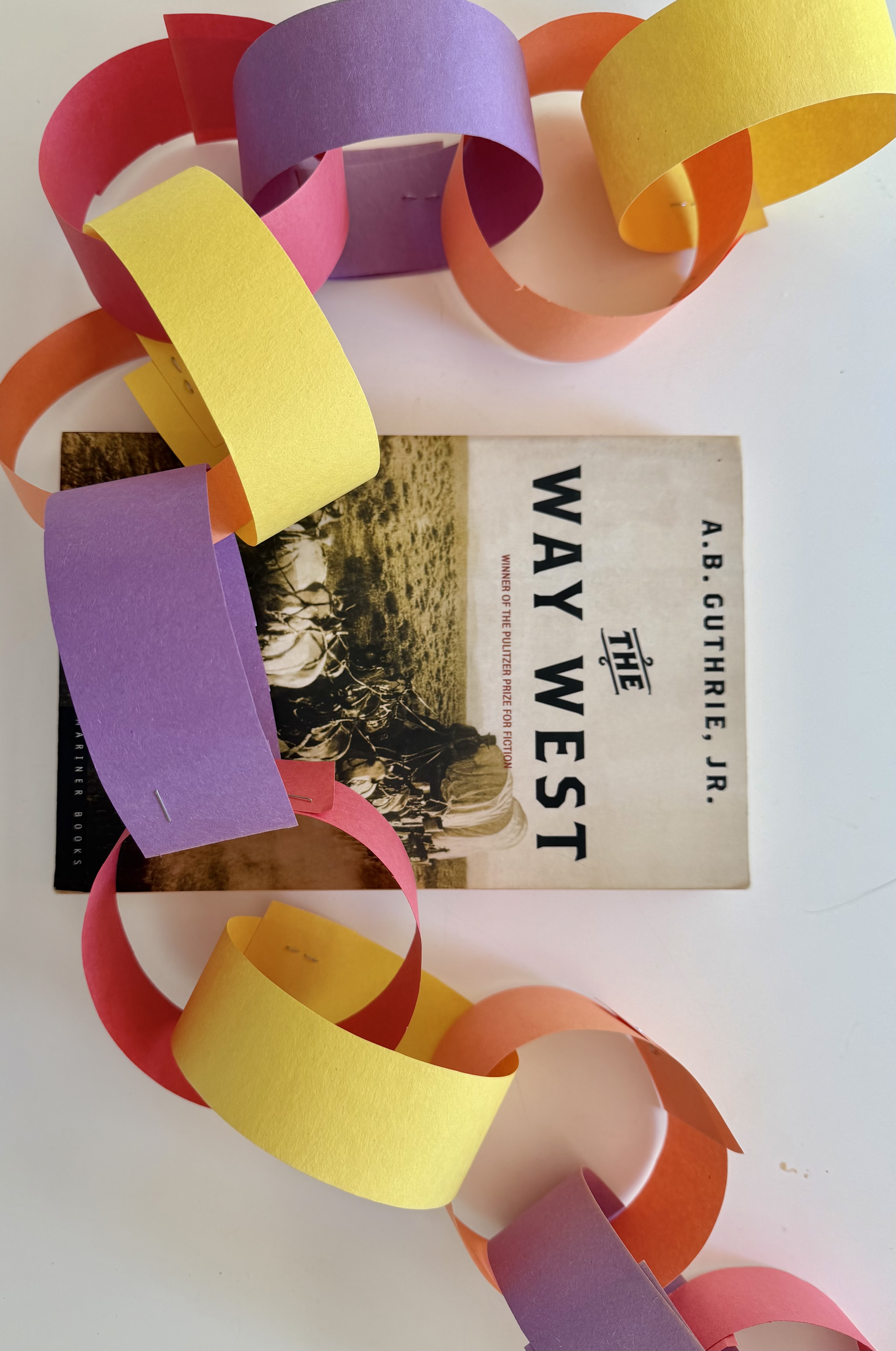
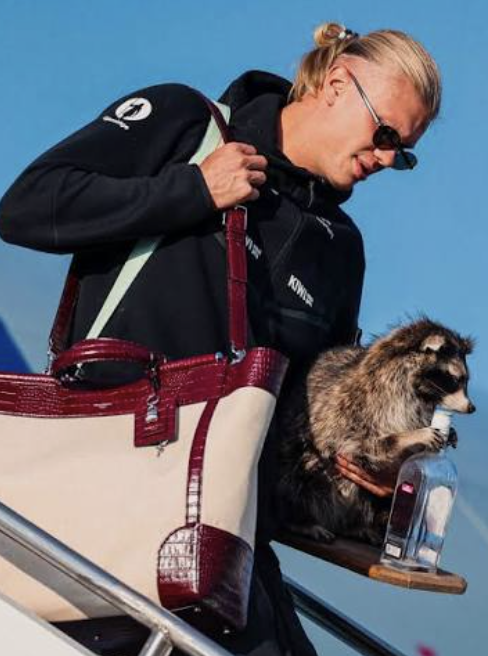

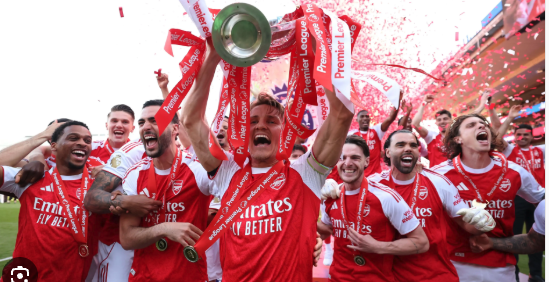

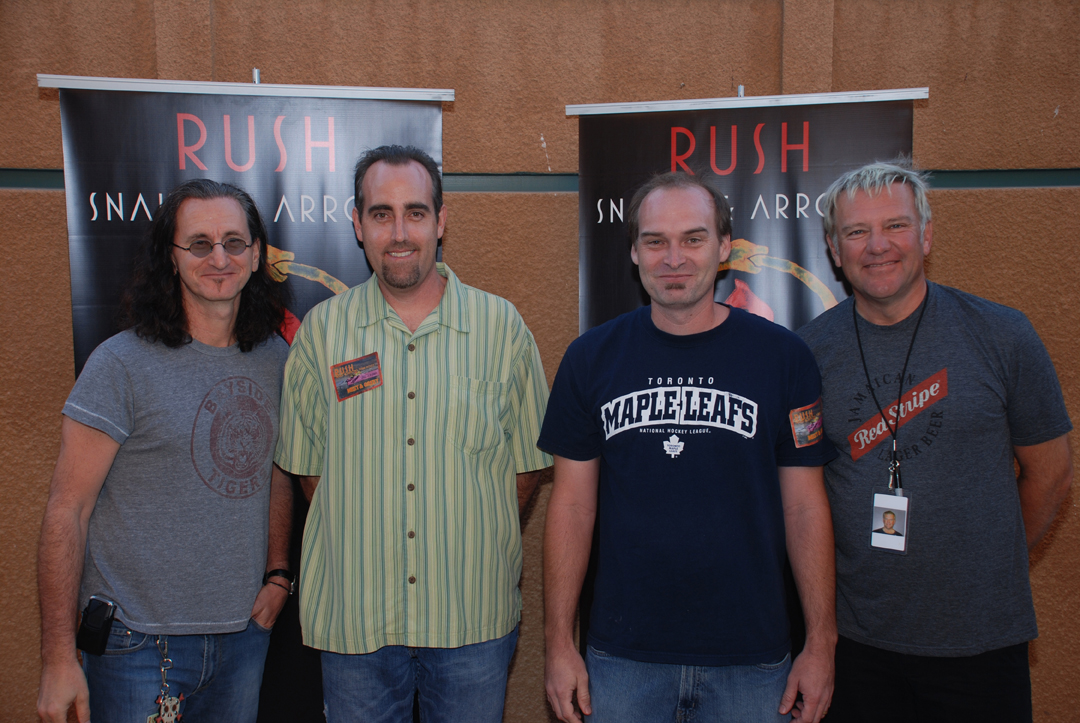

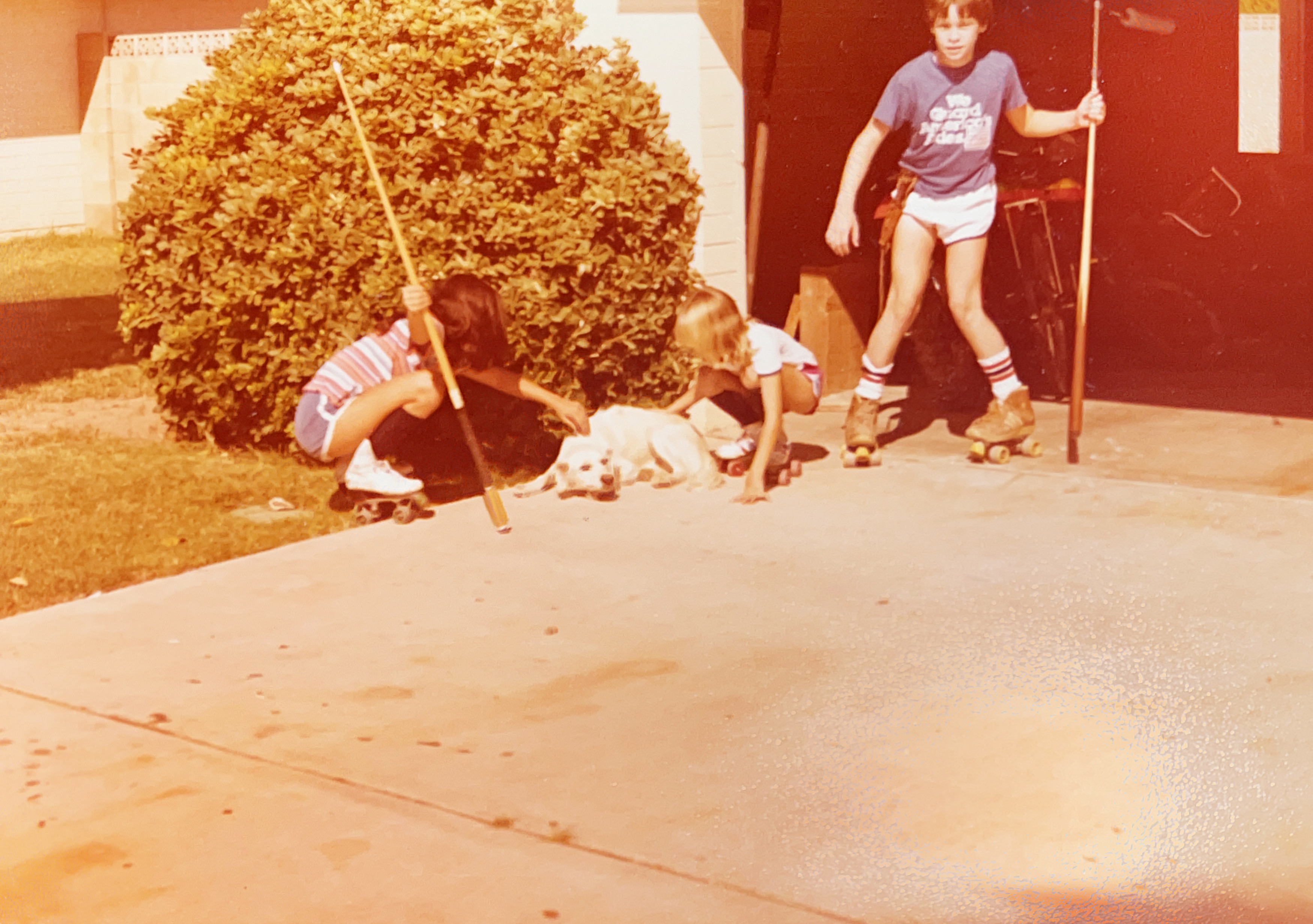
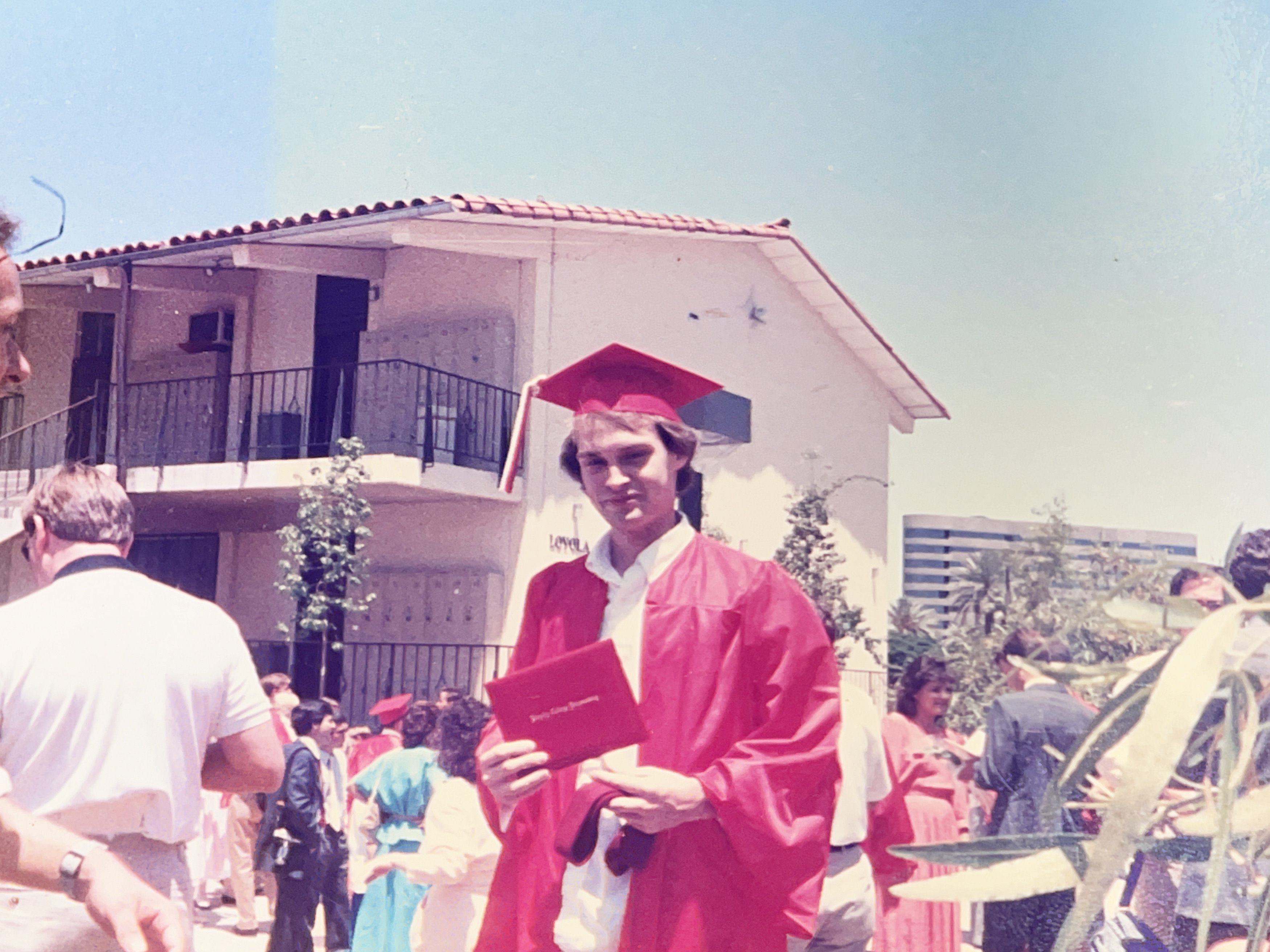


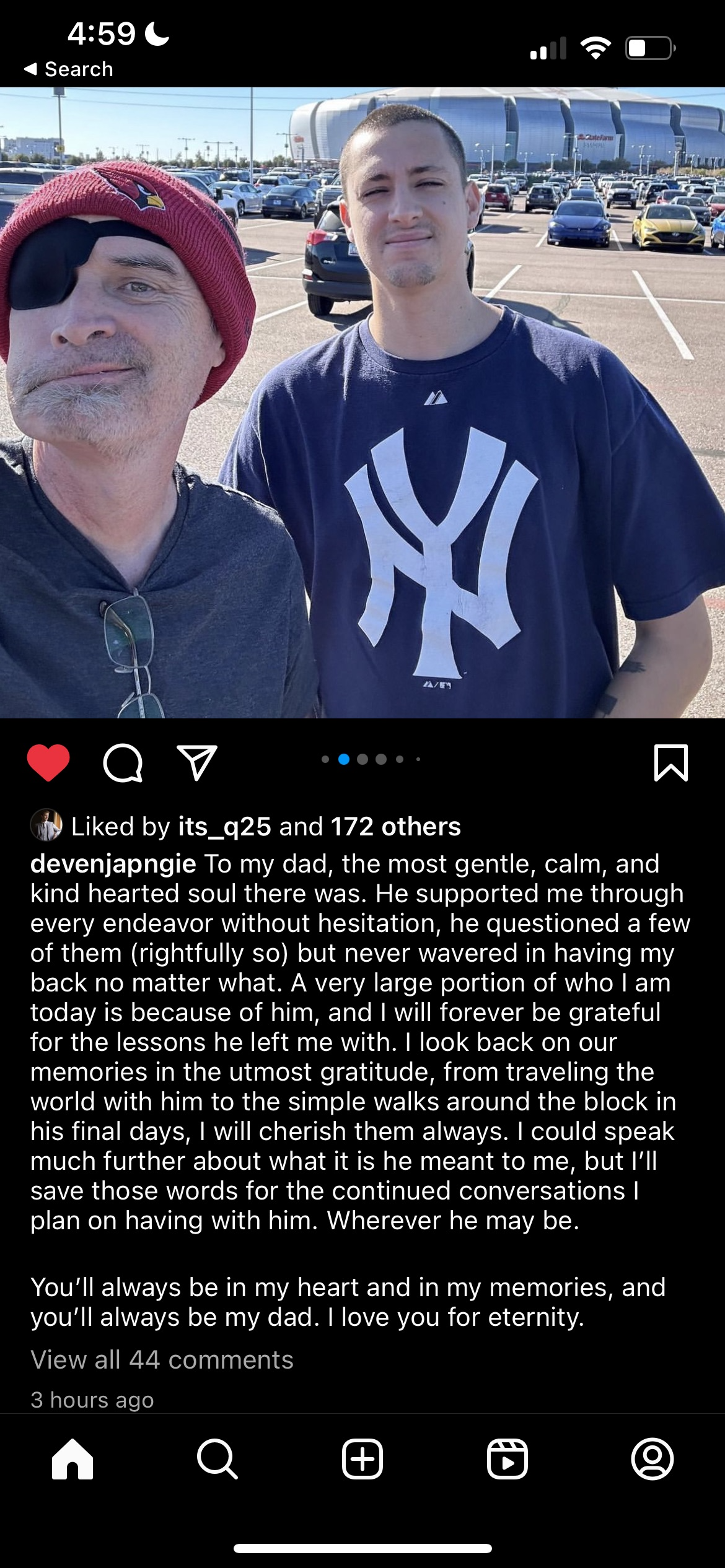

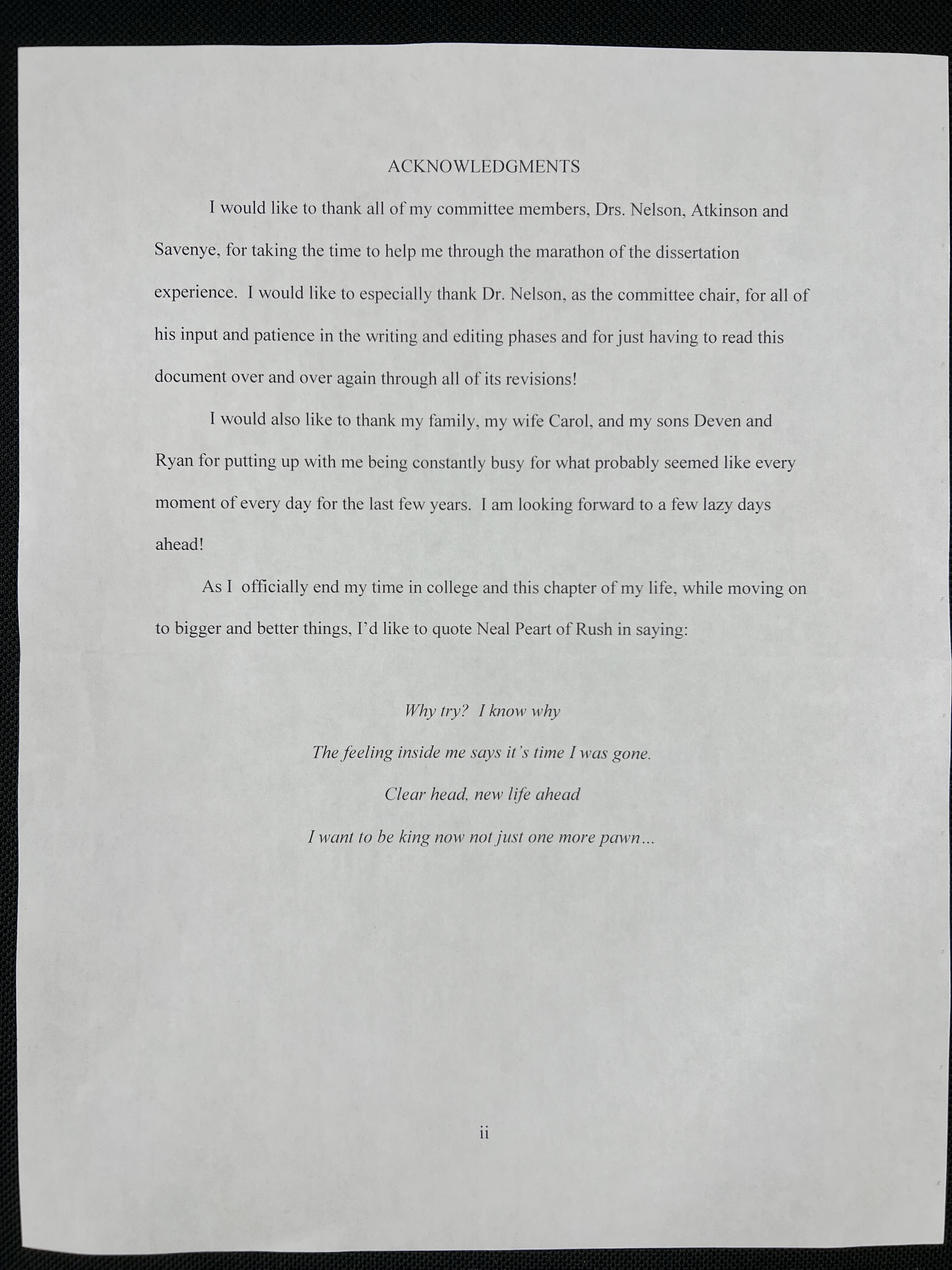
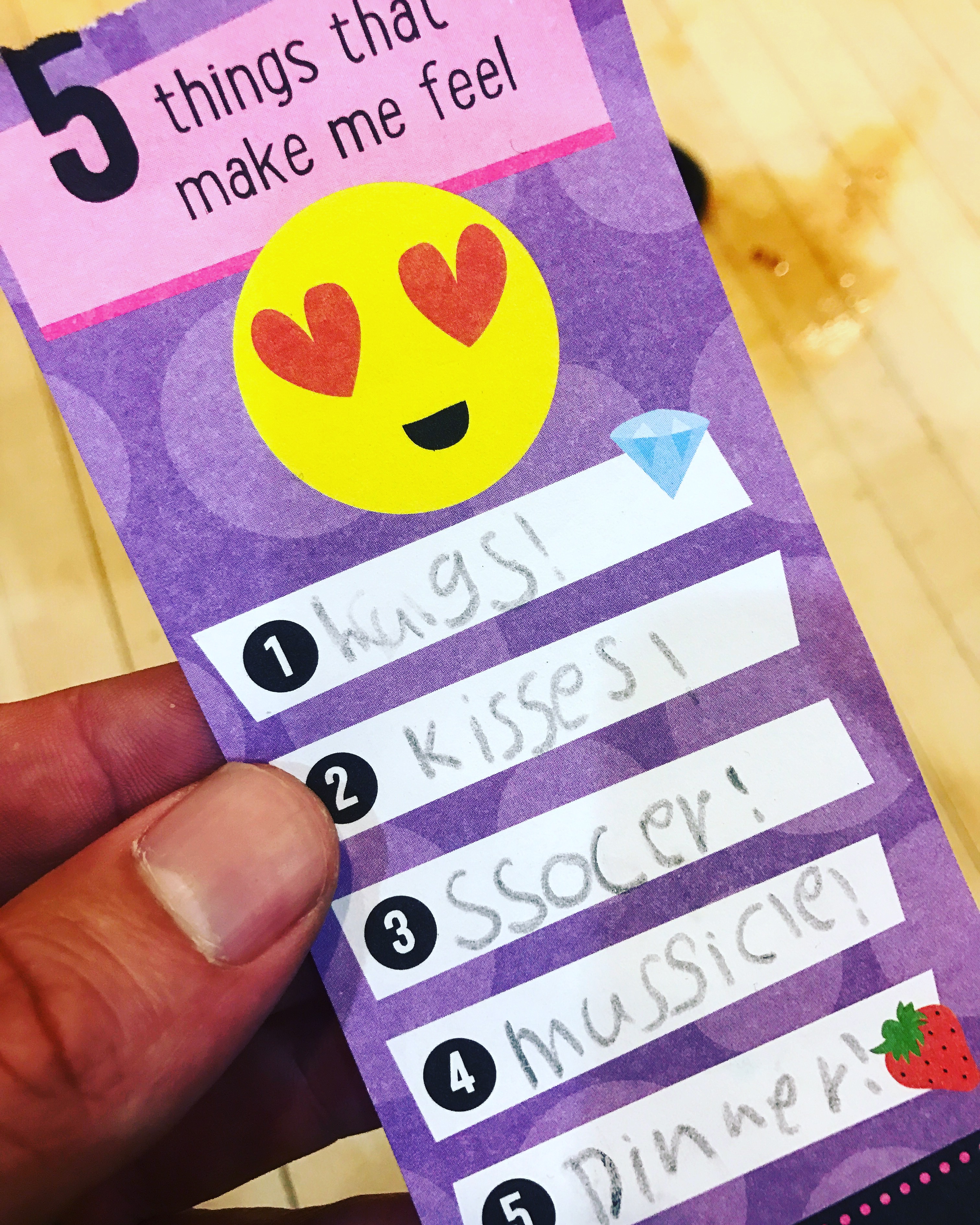
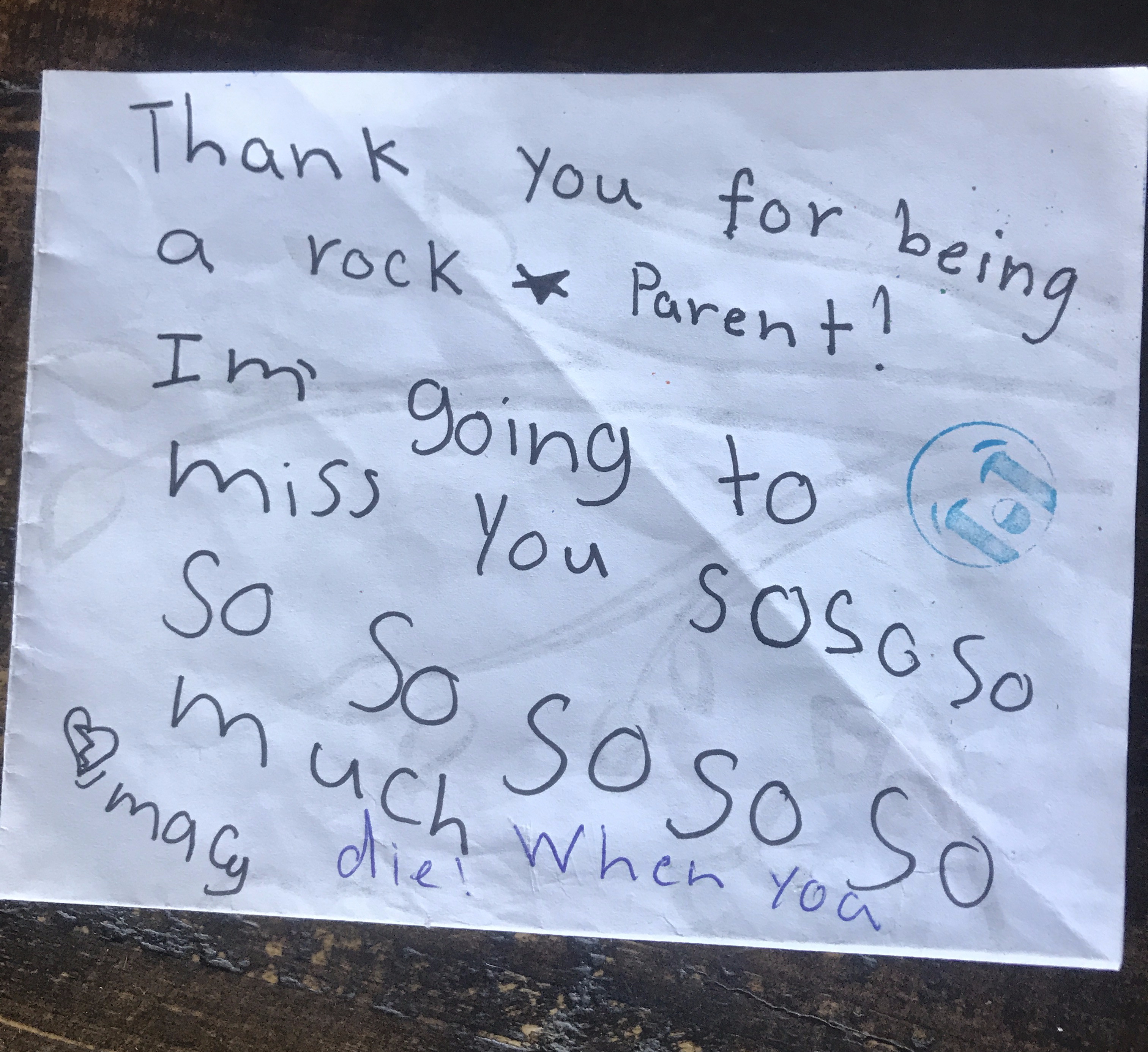
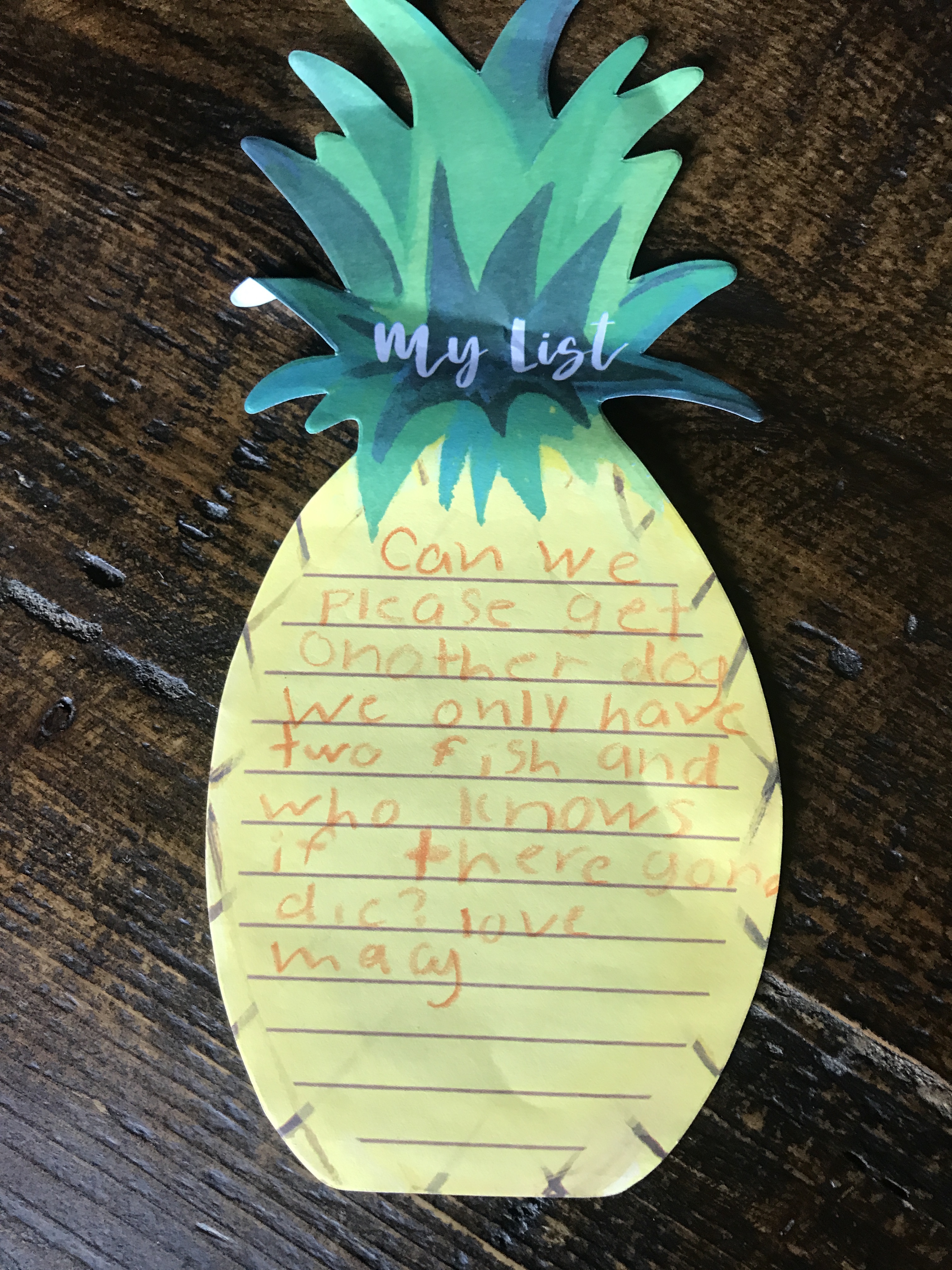
 PULITZER SCHMULITZER!