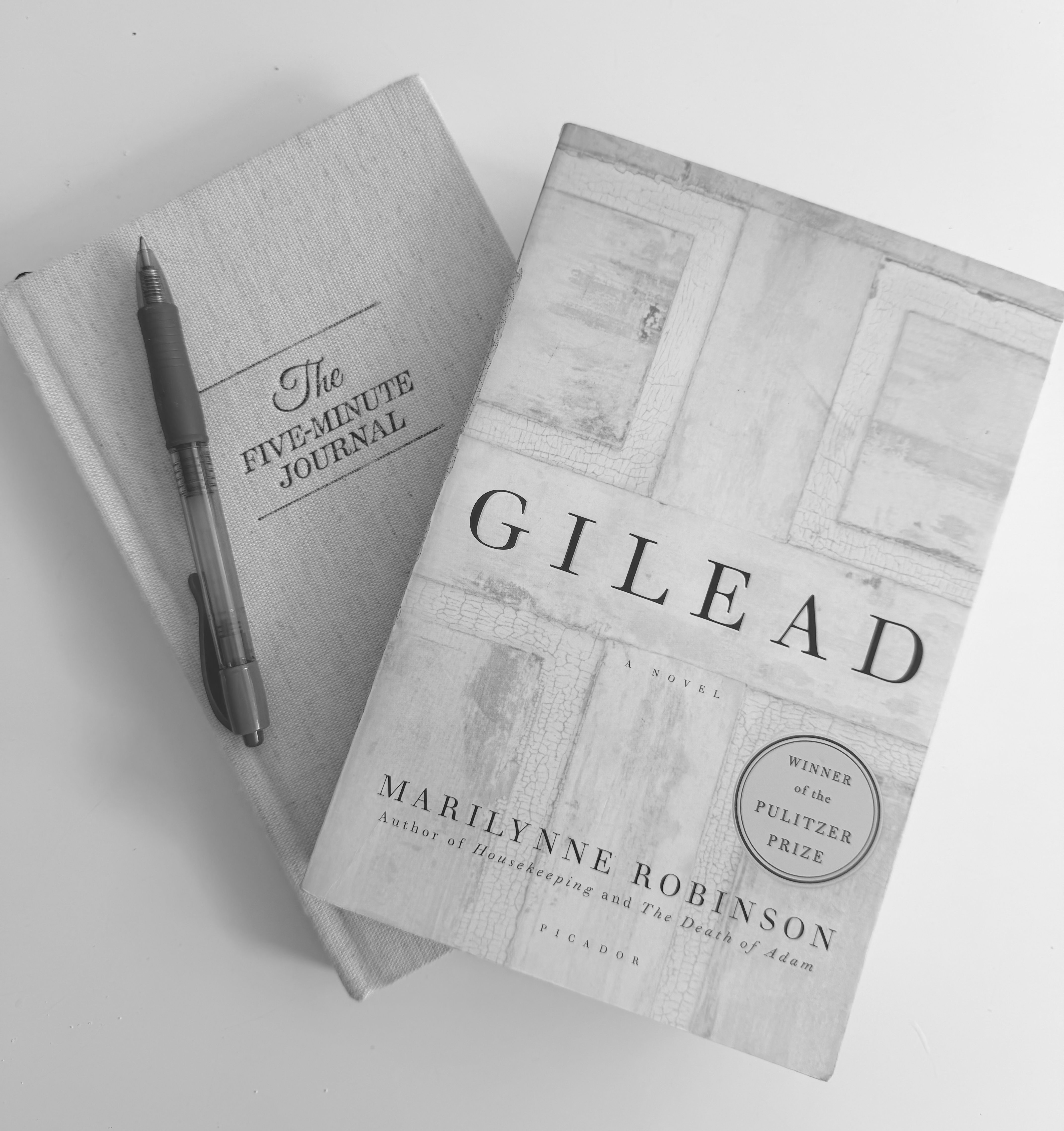
In December 2007, I started keeping a journal. Calling it a journal may be slightly generous. A journal suggests consistency, discipline, and perhaps the purchase of an attractive leather-bound notebook. What I created was a Google document into which I occasionally typed something before forgetting that it existed.
For the first few weeks, I was surprisingly diligent. I started on Christmas Eve and wrote almost every day through the following January. Then I stopped. Twenty months later, I returned for a handful of entries in 2009, followed by a few more in 2010 and 2011. By the end, the gaps had become the journal’s most consistent feature.
I recently discovered the journal again. By “discovered,” I mean that I found it sitting exactly where I had left it, safely stored in the cloud and patiently waiting for me to remember that it existed. I began reading and was immediately fascinated.
Some of the entries recorded events I still remembered. The Giants winning the 2010 World Series. Traveling to London and Paris over the holidays. Seeing Tiger Woods play at Harding Park in the President’s Cup. These were the kinds of occasions that seemed worthy of being written down. But they weren’t the entries I liked best.
The ones I loved were about things I had completely forgotten.
“Most of it’s just whining, but every so often there’ll be something I can use later: a joke, a description, a quote.”
– David Sedaris
On Christmas Eve in 2007, we checked the NORAD Santa Tracker during dinner. Santa was somewhere in Canada. Seven-year-old Sam studied the route and immediately announced, “We need to go. We need to get to sleep. Now.” I assured him that we still had time because Santa appeared to be traveling north and south and presumably still had to cover Mexico.
The following morning, Sam woke up before me and carefully measured every present under the tree in an effort to determine what was inside. He correctly concluded that none of the packages was large enough to contain the Nintendo DS he wanted. This concerned him.
A few days later, Sam offered what I described as “the quote of the year.” He was discussing the 307 foot tall Campanile tower at Berkeley and his fear of looking over the edge.
“There are just some things you shouldn’t do until you’re twenty,” he said. “And have a parachute.”
As for Lily, one night, she read me a story about Sammy the Seal. Another night, she asked for “a little lay” when she wanted someone to lie beside her before she went to sleep. When we went sledding, I placed her saucer on top of an inner tube and gave it a push. The inner tube stopped almost immediately. The saucer did not. Lily went flying down the hill and later declared it her favorite part of the day.
These moments had been gone from my memory. I didn’t recognize them until I read them, and then suddenly I could see everything again: the presents arranged under the tree, the glowing computer screen tracking Santa, Lily bundled up on the sledding hill. The journal did not merely remind me that these things had happened. It briefly returned them to me.
But the journal’s silences are meaningful too. Macy is absent from these pages for the simple reason that the journal falls silent before she enters the story. That means I have no comparable record of her earliest years, which makes me wish even more that I had kept writing. If the journal returned pieces of Sam and Lily’s childhoods to me, her absence from the journal is itself a measure of what the journal failed to preserve.
As for me, I was forty years old when I wrote most of those early entries. At the time, I already believed I was ancient. For example, after a yoga class, I made three observations: I was old, I could no longer sit on the floor with the children and get up easily, and therefore I needed to do more yoga. I then wondered what forty-year-olds who didn’t exercise must feel like. From my current vantage point, forty-year-old me seems adorable.
The journal also reminded me how much of parenting consists of completely ordinary nights. On January 14, 2008, I came home and helped Sam buy his first Pokémon card on eBay. It cost $1.85. He was earning points by reading extra books because 120 points would get him the Nintendo DS that he did not get for Christmas. Not to be left out, Lily began doing extra math problems because she wanted a two-wheel scooter.
“Tonight was one of those nights where I love my kids,” I wrote. I’m sure I loved them on the other nights too. But on that particular night, I noticed.
A week later, I worried that I had been too hard on Sam. He had misplaced a book he was writing about a fish named Squeaky and came to me with tears in his eyes. I was busy doing something I’m sure wasn’t that important and became irritated with him for becoming so upset over something small. (And if you’re wondering, the book about Squeaky was successfully recovered.)
The next evening, two Pokémon cards we had ordered arrived in the mail. Sam was delighted, and the two of us apparently spent the evening making each other laugh.
“We crack each other up,” he told me.
I wrote that down too.
Reading these entries now, I kept wondering why I had stopped. Even then, I understood how quickly the details disappeared. Several entries begin with an admission that I had already forgotten what happened a few days earlier. On January 12, I wrote, “Already forgot what happened on Saturday night.” On January 27, I confessed that six days had gone by since my previous entry. When I returned to the journal in October 2009, after an absence of one year and nine months, I read the earlier pages and wrote that I wished I had kept going.
Then I failed to keep going.
This happened repeatedly. Every time I rediscovered the journal, I was grateful for what I had written and disappointed that I hadn’t written more. Then, having learned this valuable lesson, I would stop writing again.
The final entry from that period was made in March 2011. It preserved an email from a neighbor whose son, Carter, had been friends with Lily since they were little. She had driven the two of them home the previous day and overheard a conversation in the back seat. Lily and Carter were about eight years old.
Here is their conversation:
Carter: “What should we talk about?”
Lily: “I don’t know. What do you want to talk about?”
Carter: “I don’t know.”
Lily: “When I was with my friend on a field trip yesterday, we didn’t know what to talk about, so I said we should talk about tacos.”
Carter: “Oh.”
Lily: “Let’s talk about our best friends. Who is your best friend?”
Carter: “In the boy category or the girl category?”
Lily: “Both.”
Carter: “Oh. In the girl category, you are at the top. In the boy category, Nick and Sam.”
Lily: “Oh.”
Carter: “How about you?”
Lily: “In the boy category or the girl category?”
Carter: “Both.”
Lily: “Oh. In the boy category, you are at the top. In the girl category, it’s Izzie.”
That was the entire conversation. Nothing happened. There was no great childhood achievement, family milestone, or historical event. Two children briefly struggled to find something to discuss, considered tacos, and then carefully established their respective friendship rankings.
That is precisely why I am so grateful someone wrote it down.
“We write to taste life twice, in the moment and in retrospect.”
– Anais Nin
That idea of using writing as a way to preserve what time would otherwise take is at the heart of one of the quietest Pulitzer winners I have read. Marilynne Robinson’s Gilead won the Pulitzer Prize for Fiction in 2005. The novel is set in 1956 and takes the form of a long letter written by Reverend John Ames, a seventy-six-year-old Congregationalist minister in the small town of Gilead, Iowa.
Ames is dying from a heart condition. He has married late in life and has a seven-year-old son whom he knows he will not live long enough to see become a man. He begins writing so his son will someday know who his father was.
At first, the premise sounds a little like The Last Lecture, Randy Pausch’s 2008 book based on the farewell lecture he gave after being diagnosed with terminal pancreatic cancer. Pausch spent days assembling a PowerPoint presentation of stories and lessons he hoped would eventually reach his three young children. He organizes those lessons around clear ideas about pursuing childhood dreams, overcoming obstacles, and helping others achieve their goals.
Ames’s version is far less organized. He wanders. He repeats himself, changes subjects, tells family stories, recalls old grievances, discusses theology, describes ordinary moments, and occasionally loses track of what he has already said. His letter feels less like a formal account of a life than like a mind moving through one.
Much of the novel concerns the generations of Ames men who came before him. His grandfather was a fiery abolitionist preacher who believed God had called him to fight slavery and who lost an eye during the Civil War. His father was a committed pacifist who became increasingly troubled by his own father’s militancy. Ames has spent much of his life positioned between them, trying to understand what faith requires and how two good men could reach such different conclusions. That struggle between conviction and compassion resurfaces when Jack Boughton, the troubled son of Ames’s closest friend, returns to Gilead. Ames distrusts Jack despite considering himself forgiving, but upon learning that Jack has been harboring a secret, Ames is forced to confront Jack’s suffering and the limits of his own generosity.
Yet the novel’s emotional center is Ames’s love for his young son. He knows his son will grow up largely without him, so he tries to leave behind something useful. He offers stories, warnings, family history, spiritual advice, and explanations for choices his son may someday question. But more than anything, he pays attention.
Ames watches his son playing in the sprinkler. He notices the light, the rain, an old man walking down the street, and the quiet routines of his home. He understands that these moments will continue after he is gone, but he will no longer be there to witness them. His letter becomes an attempt to remain present in a future he will never see.
That is what makes Gilead such a beautiful book. Robinson takes a story with very little conventional action and fills it with moral and emotional weight. Her prose is lyrical without losing the sound of Ames’s voice, and the novel treats ordinary existence as something worthy of intense attention. Ames can be wise, but he can also be jealous, stubborn, and wrong. His blind spots keep the novel from becoming a sermon delivered by a saint.
That same meditative quality can also make Gilead a challenging book. Readers looking for a propulsive plot may find it slow, repetitive, or overly theological. The story moves according to memory rather than chronology, and Ames often circles an idea several times before arriving anywhere. But that structure is also the point. Memory does not proceed neatly, particularly when someone is trying to compress an entire life into a final letter.
Ames knows exactly why he is writing. He is leaving a record for his son. I had no such plan.
“We forget all too soon the things we thought we could never forget.”
– Joan Didion
When I started my journal, Sam and Lily were seven and five. I wasn’t confronting my mortality. I wasn’t imagining them as adults reading about their childhoods. I certainly wasn’t attempting to explain the moral inheritance of several generations of the Orta family. I was forty years old and apparently preoccupied with yoga, the NFL playoffs, Pokémon cards, and whether Lily would score more soccer goals than another child named Luke.
But reading the journal now, I realize that I was doing a small and accidental version of what Ames does in Gilead. I was leaving behind a record of what I noticed.
The journal does not tell Sam and Lily everything about their childhoods. It doesn’t even tell them everything about one month of their childhoods. It cannot explain what it felt like to be their father or capture the thousands of ordinary mornings, dinners, car rides, baths, bedtime stories, soccer games, and conversations that disappeared without being recorded.
What it can tell them is that Sam once believed twenty was the appropriate age to climb a tower, provided he had a parachute. It can tell him how excited he was when a $1.85 Pokémon card arrived in the mail. It can tell Lily that she was fearless on a sled, confident in goal, and once considered tacos a perfectly reasonable solution to an awkward silence.
It can also tell them something about me. I worried about missing Lily for several days when work became busy. I worried that I was too hard on Sam. I could be impatient and distracted (still very true). I sometimes recognized a wonderful day while it was happening, and sometimes needed the journal to show it to me years later. Mostly, it can tell them that I was watching.
I wish I had written more. I wish I had preserved every funny comment, every bedtime ritual, and every uneventful evening that seemed too ordinary to record. I wish I had understood that the things most likely to disappear were the things I would eventually most want back.
But Gilead is not merely a book about anticipating loss. It is also a book about gratitude. Ames knows he cannot keep his life, his family, or the world he loves. What he can do is give them his attention while they are in front of him, and then leave behind some evidence that he did.
I did not preserve Sam and Lily’s childhoods. No journal could have done that. I preserved a few days. One involved Santa’s route through Mexico. Another involved a $1.85 Pokémon card. And in one, during an otherwise unremarkable ride home, Lily was at the top of someone’s girl category.
I’m grateful someone wrote it down.


Leave a Reply